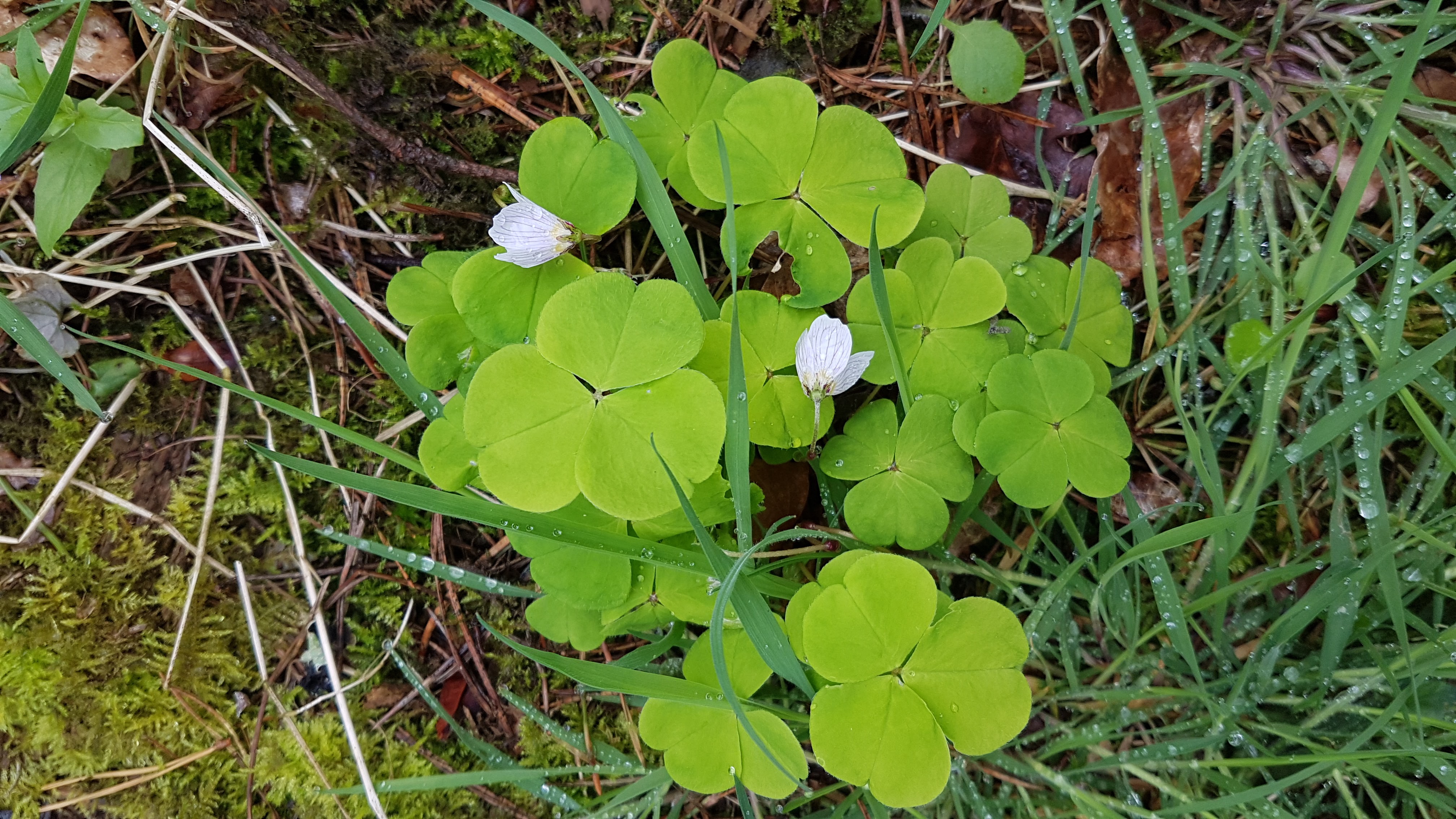
“Wild Flowers of the Woods” – a small selection from Five Mile Wood!

Although I was born and grew up in a London suburb, awareness of nature was hammered into me, partly by my family, partly by primary school, where the “nature table” was obligatory in every classroom and was always piled high with artefacts, and partly by the nature books that lay around the house. It was while poring over these behind the sofa that I began to learn my flowers.

My favourite was entitled “Spring Flowers of the Woods”. To start, I relished the beautiful hand-painted illustrations, and, later, when I read that the woods were full of flowers in spring BECAUSE leaves were off the trees thus allowing light for the flowers to open and the pollinators to amble in, it was my first glimmer of ecology, and the entangled ways of nature. I came to recognise and seek those exquisite, archetypal spring flowers such as primrose, wood anemone, wood sorrel, mercury and violet.
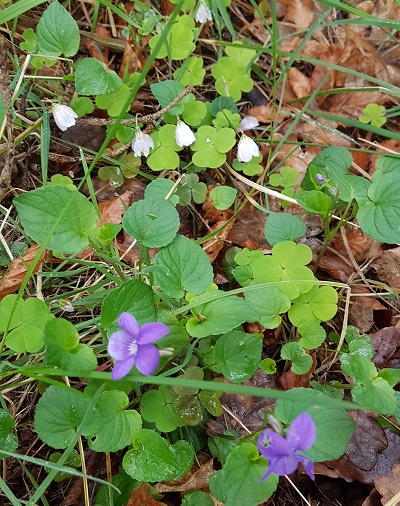
Wood Sorrel and Violets

Today in Five Mile Wood, on a damp and overcast day, I greeted some of them. In the broad strip of mixed broadleaved and conifer woodland to the south, violets a-plenty sprinkled themselves over the dead leaves of birch and beech, growing on old stumps and under windthrown trunks. Sometimes they congregate with Wood Sorrel, whose edible, trifoliate leaves draped from spindly stems, and finely-veined, nodding white flowers are one of the (many) most beautiful things on earth. Wood Sorrel grows here only in scattered communities. I have the impression these colonies are networking towards each other, perhaps via the hidden telegraph of soil-fungal communication.

I have not yet found Wood Anemone here, which is surprising, but intriguingly, there is the merest germ of a bluebell wood, if you know where to look, and they are beginning to flower. (photos were horribly blurry, and I shan’t burden you with them. Everyone knows what bluebells look like.) Bluebells are said to be a sign of ancient woodland (which Five Mile probably isn’t) or at least a settled woodland ecology. I do not wish to unsettle them!

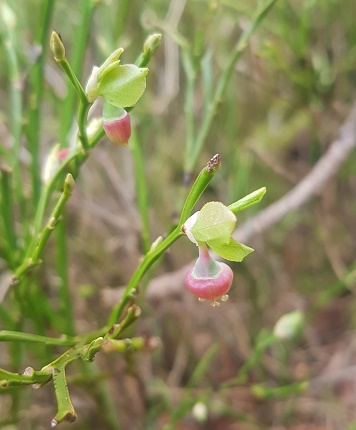
As the ground rises, that ecology morphs into something more akin to acid heath (there are certainly signs that at least part of the central area once held deep peat, signifying raised bog, perhaps). Two flowers in this habitat – not stars of “Spring Flowers of the Woods” – gave me great pleasure. One was the blaeberries that line the paths and snuggle up to trees here. They are now in hard-to-spot flower. Tiny, beautiful dull reddish bellflowers (look closely!) which will turn into the fruit of this our native blueberry and provide good walking snacks in the summer. It’s a treat to see this wild harvest crop doing so well; it was somewhat decimated by the last clear-fell. (Do we understand well enough the changes we force on a landscape by our actions? Do we care enough?)
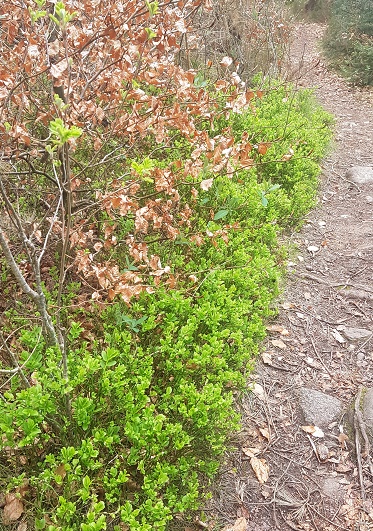
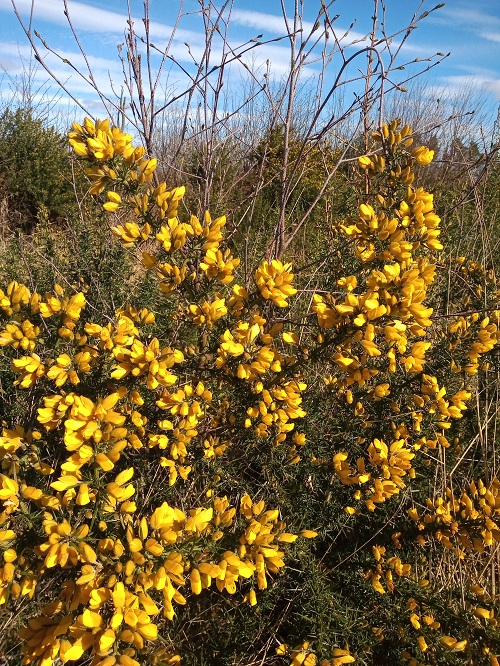
The other is gorse. I have a very soft spot for this riotous, prickly native shrub. So many plus points does it have: nitrogen fixing, baby tree protecting, wild tea providing and a redoubtable habitat for spiders (see here) among others. What’s in a few scratches? A week ago, cycling round the wood at speed (to be honest, anything over 6mph is “at speed” for me even on an electric bike), I did incur a few scratches….. but it was like moving through a mist of warm coconut, the delicious gorse flower smell made powerful by the bright sunshine and muggy air. Today, it was fainter – but thanks to the slightly unnerving vigor with which gorse is spreading across the path, I could still catch it. Divine!
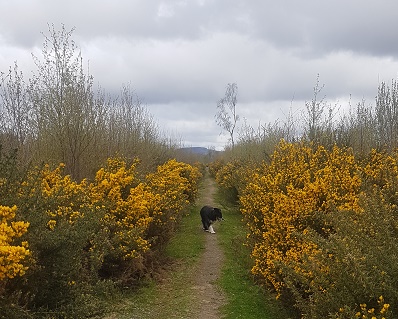
Gorse-intoxicated Border Collie

Primroses seem to be absent, as well as the wood anemones, but there was this unexpected relative – Primula denticulata, the Drumstick Primrose or, locally in Angus, the Kirrie Dumpling. Native to Himalaya, this has not, I suspect, got here on its own! If I were a hard-line ecologist, I’d uproot it (and find a home for it in a garden). I’m not, but there might be a good argument for collecting the seed before it spreads itself about. Or not?
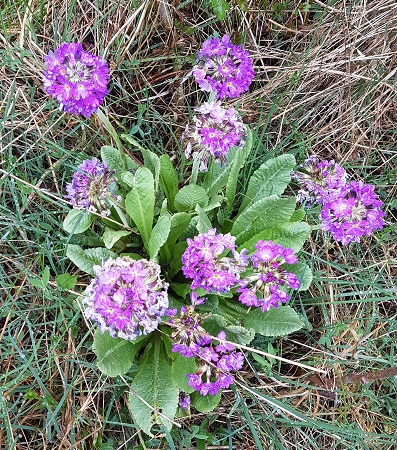
Primula denticulata, the Kirrie Dumpling

The Long Way Round to Taymount Wood

The Pathfinder

We met up at the Taymount Wood car park, Linda and I, put on our boots and turned away, not into the gate. This was to be the long road to the woods, a circular walk via the disused railway line which once ran as a ponderous branch from Stanley across the River Tay to Coupar Angus. The embankment is reached from the Taymount Mains farm track, and you then head towards Kinclaven and Ballathie, across open country, under disused bridges and past a little railwaymen’s shed made of sleepers with a brick chimney still in place. Although today’s challenge for us was to find and walk the narrow path through the northern finger of the wood, the line itself offered a few challenges – a chilly wind and stretches of water where the rains of March hadn’t percolated the poorly-drained soil.

You turn north-west away from the line before you get to the grounds of Ballathie Hotel, crossing the road and continuing north up a rough track beside the Old Smiddy. The track goes past several houses and in the past, we’d stuck to it, until it vanishes at a farmhouse. Then we’d scrambled witlessly through fields and fences and bits of scrub till we arrived, somehow, on a track in Taymount Wood. This time, we were determined to find the “proper” path. So, we left the comfy track when it turned the bend and continued up to the edge of the wood. People had been this way, but not many, and it wasn’t clear how far in we should go before we turned left. Google satellite was remarkably unhelpful.

Dogs have many uses. Everyone thinks of companionship, protection and exercise machine, but an intelligent dog is a wonder at Finding the Path. While we stood wondering and wafting around, Jed set off into the unruly herbage with a look of collie dog purpose, nose to the ground. Sure enough, when we followed, there were the vestiges of a footpath. It doesn’t take many human footprints – and barely one canine print – to inform Jed this is The Way to Go. We continued, scrambling after him, and he didn’t lead us into any blind alleys. At times, we were on the point of losing faith, but then the path would reappear, on the other side of a boggy stretch or a tangle of bramble and brushwood.

There is a path here somewhere….

Wind-throw had put up many of the barriers that challenged us. I discovered I’m at an age where I’m a bit stiff for limbo-dancing under fallen trees, and my sense of balance (never my strong point) for climbing over them was precarious to say the least. There were points when we even doubted the dog, but then to our great surprise we encountered someone going the other way – an ecologist doing a survey of small mammals for West Stormont Woodland Group no less – who assured us that a. we were on the path and b. it was passable, if a tad wet in places. Well, we certainly found the wet places and finally stumbled out onto the hard forestry track that would eventually take us through the main wood and back to the car park. The challenge wasn’t quite over – several metres of scratchy, mean-minded gorse had colonised the track to meet in the middle, and we suffered quite a few scratches and tears before we were through it – noting jealously how impervious the coat of a collie dog is just about anything.

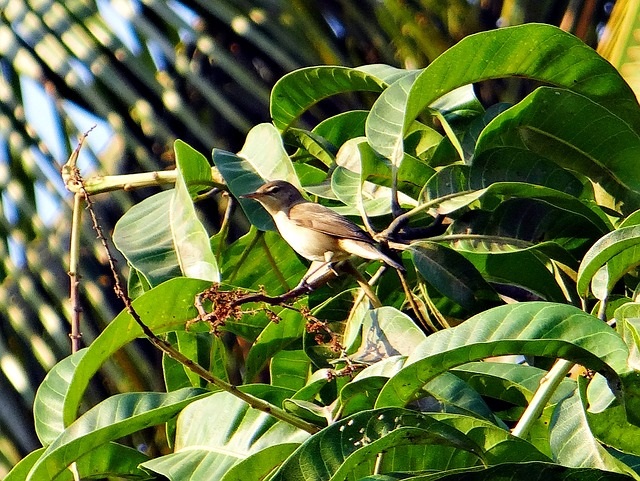
Common Chiffchaff (photo Bishnu Sarangi, Pixabay)

And the gift from today’s walk? There were lots – newly unfurling larch leaves, frogspawn in a drowning bit of track, skeletons of last year’s ferns, the beautiful vertical grandeur of the trees that hadn’t blown down, some chestnut brown bracket fungi left from the autumn. But as soon as we entered the wood on our optimistically rediscovered path, we heard the chiff-chaff call nearby. The earliest of our summer warblers to arrive, this is a small brown job of a bird, indistinguishable from willow and wood warblers unless it keeps still and stays a metre away from you. This one didn’t – they never do – but the call, exactly like the bird’s name, sets it apart. We never saw our little warbler, but the mocking “chiff-chaff-chiff-chiff-chaff” was never far away. It was, I am sure, laughing its little head off, but we chose to find it encouraging. When we found ourselves safely “out of the woods” and into the wood, it went off to scoff at something else. It made us appreciate all over again the wide range of habitats the woods provide for many bird species, residents and summer or winter visitors. I look forward to more birdsong in Taymount Woods this spring.

Find out more about WSWG and out hopes for community ownership of the woods at weststormontwoodlandgroup.scot

Whose Woods are These? I think I know….*

(This is the first in a new series of posts for West Stormont Woodland Group. From fear or repeating myself, I thought I’d write about the fact that each month, the woods have a Gift for us. And every month, there is at least one challenge that faces us – whether physical, philosophical or organisational – in contemplation of owning woodland as a community.)

FEBRUARY’S GIFT: GORSE FLOWER TEA

Of course, there are gorse bushes in flower in February in Five Mile Wood. There are gorse bushes in flower in the woods every month of the year, providing pollen and nectar for insects out too early or too late in the season. Some ancient lecher noticed this and spawned the saying “When gorse is not in flower, then kissing’s out of season.”

Gorse in flower in a cold and clenching winter such as this of 2021 is a real gift. It’s too cold to detect the rich coconut smell from them which can be almost overpowering in high summer, but the gold dazzles against the grey landscape of February or keeks through the smothering snow. Gorse has been used for many purposes, from feeding tough-mouthed horses in winter to sweeping chimneys. It’s a nitrogen fixing plant, like all the pea family, and imparts fertility to the soil. Burn it, and the alkaline ash is good for cleaning soiled linen.

The flowers themselves are used to make a yellow dye, and whether it worked or not, some dairies insisted that feeding gorse to milking cows made for a rich yellow butter. I don’t use gorse for any of these, but I do make gorse flower tea. It looks wonderful swirling around a glass teapot and you might catch a breath of that coconut smell. Don’t expect to taste it; it’s a very subtle (or absent!) taste. If you look hard you may find early shoots of nettle in the woods to give the tea some substance.

But don’t pass the gorse on to anyone else – allegedly, making a gift of gorse guarantees you’ll end up fighting. It’s the woods’ gift to me in February, and I will have no quarrel with the woods.

A CHALLENGE FOR FEBRUARY: WHOSE WOODS ARE THESE?

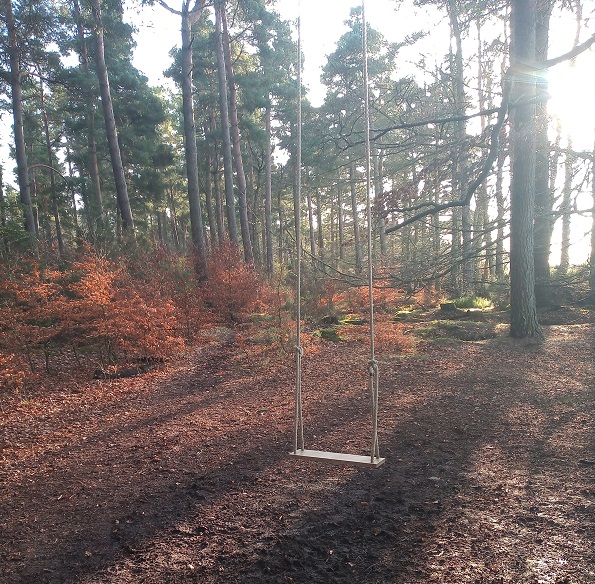
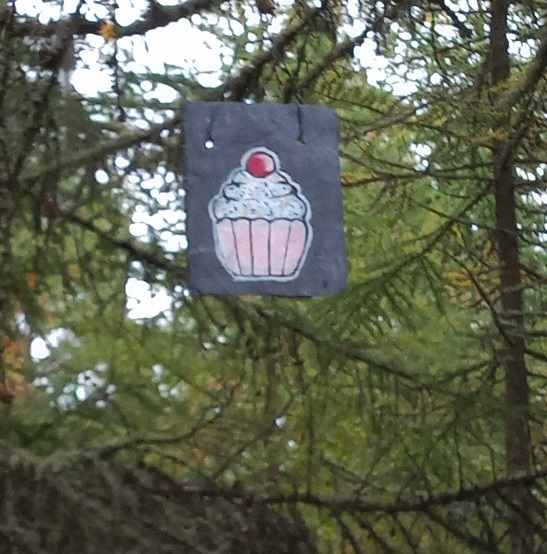
I think the woods are used more now than I remember in over twenty years, Evidence for that lies not just in who you meet, but in new tracks veering off, in small acts of clearance, in scattered pieces of art, in well-maintained articles of recreation like the new swing in the picture. Using the woods implies a sense of ownership, a vested interest, a certainty of relationship. A future.

But are we all buying into this? And will that feeling of belonging translate into an actual belonging? If Five Mile and Taymount Woods are to be taken into community ownership, it’s essential that community identifies itself, makes itself heard and provides the evidence of its existence that will count.

This month, West Stormont Woodland Group will begin a Community Consultation on the proposals the group has been working on for the two woods (or, as it’s widely seen, the one wood with a gap in the middle). Of course, Covid restrictions have forced the consultation to be mostly online, but this shouldn’t be seen as a problem – taking an event online in my recent experience amplifies and multiplies its reach and scope. There is a new website dedicated to the consultation, which launches on 22nd February; details can be found at http://www.weststormontwoodlandgroup.scot ,on Facebook, or by emailing contact@weststormontwoodlandgroup.scot

The challenge is to get you, me, all members, all non-members local to the communities around the woods, all of us starting to think these woods might be ours, to contribute to the consultation. Spread the word!

*Quoted from the opening lines of “Stopping by Woods on a Snowy Evening” by Robert Frost.

Last Leaves Falling

A Post for West Stormont Woodland Group

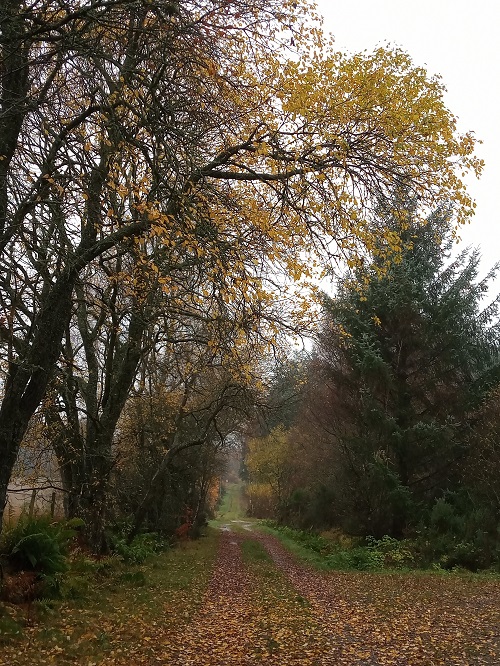
I pause on my way through the woods, quieting my breathing, keeping as still as I can. There is no sound, there is no wind. There should be no movement. Yet within the vascular systems of the broadleaved trees that bound the track, small enzyme changes are at work, invisible changes that lead to letting go, abscission, leaf-fall.

And down they come, silent, slow, like snowflakes in a still winter’s night. There is no flurry, no sound of wind through dry foliage, just the falling. Just the peace. Some trees are bare already. Birches are among the first to blaze golden and lose their leaves. Oaks keep hold of theirs till the last, but then they are usually the last to open in spring. Mature trees abscise before young ones. Young trees, and trees that have been pruned, will produce what’s known as juvenile growth, one feature of which being that the processes of leaf-fall are delayed. That’s why beech trees are so popular for hedges, the dry, crackly leaves slipping from gold to brown and staying in place till spring.

Young beeches, self-sown among the conifers at Taymount Wood’s dark heart, shine like tawny beacons.

They coat the ground, these last leaves, slick with last night’s rain and the condensing sweat of mist that loiters in motionless, tangled branches. Small sweeps of the already fallen lie around sedges and rushes, in hidden puddles and ditches. What else do they conceal?

A small brown toad lurks unmoving as the day, camouflaged among old birch leaves at the path edge. Then he moves, lopes distractedly into the grass, and is visible.

I like the emergence into visibility of the toad, and I enjoy the wood revealing its secrets as the leaves fall. The bizarre jutting side-branch of a fir tree, and the even more inexplicable branch that has fallen over it like a necktie, and somehow grown into an A shape. The filigree, waterfalling twigs of bare birch trees. The holes in trunks and large branches, the red squirrel’s aerial expressway from tree to tree. When leaves fall, I see that some trees are still richly clothed, decked in lichens and mosses so profusely you can’t see the wood, and decorated with the jewels of fruit and fungi. Food, forage and habitat here for small creatures that depend on the woods through the winter.

By the King’s Myre, the stillness of the day is magnified by the strange open vastness of this stretch of water. Reeds and trees and overhanging trees are reflected; birds are absent or silent. In the boats drawn up to the jetty, the leaves lie in rain that’s collected there, the sky bounces back, grey, metallic, motionless. There are no wafting clouds; it is all cloud, all greyness. And more leaves unhook themselves from life, drift down soberly against the small frictions of the early winter air.

On twigs and branches, wherever a leaf falls, a small tight bud, wrapped unnoticed in its winter coat, remains and waits.

Exits, Entrances and Crossroads

A post for West Stormont Woodland Group

Is there an artist in the wood?

There is, really, only one easy way into and out of Five Mile Wood – at least in October. That’s from the south end on the Stanley to New Mill cottages road – currently a bit of a no man’s land thanks to the dualling of the A9. Here the track is clear, broad, made for forestry vehicles – and you can even park! At the north end, there is also the old straight track I’ve written about before, from South Barns and beyond that, with a diversion to Bankfoot. Follow the line of this track and it will take you to Dunkeld, once a mighty ecclesiastical seat. I learned last week that from Dunkeld to the wood it’s five miles – hence the name.

I wonder what happened to One, Two, Three and Four Mile Woods?

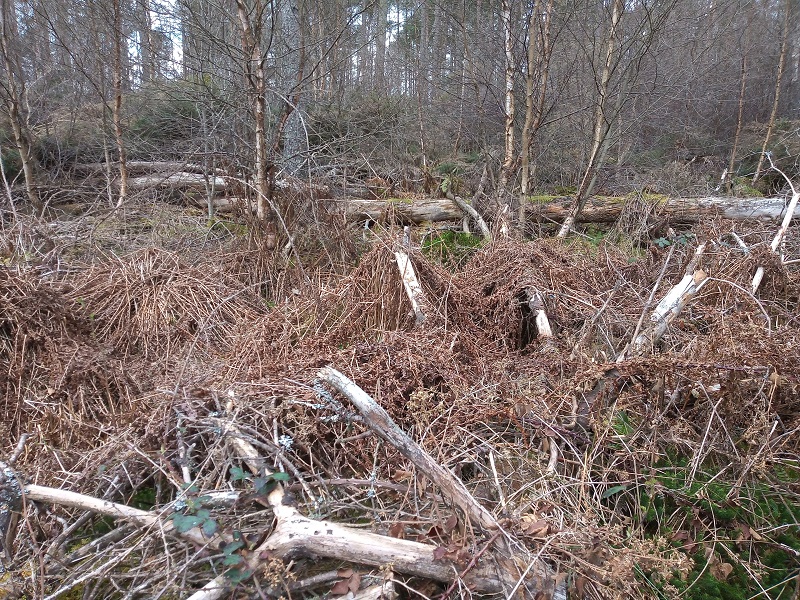
But once through the gate at the end of the straight track, the going is tricky. At this time of year, wellies are essential, thanks to the legacy of ditches, boggy ground and waterlogging that followed the felling of the trees here. When did it become the norm for forestry practice to leave such a mess? However, with care, agility and thanks to the enterprising actions of previous walkers using felled timber to ford the worst ditches, you can get to the main path that circles the wood.

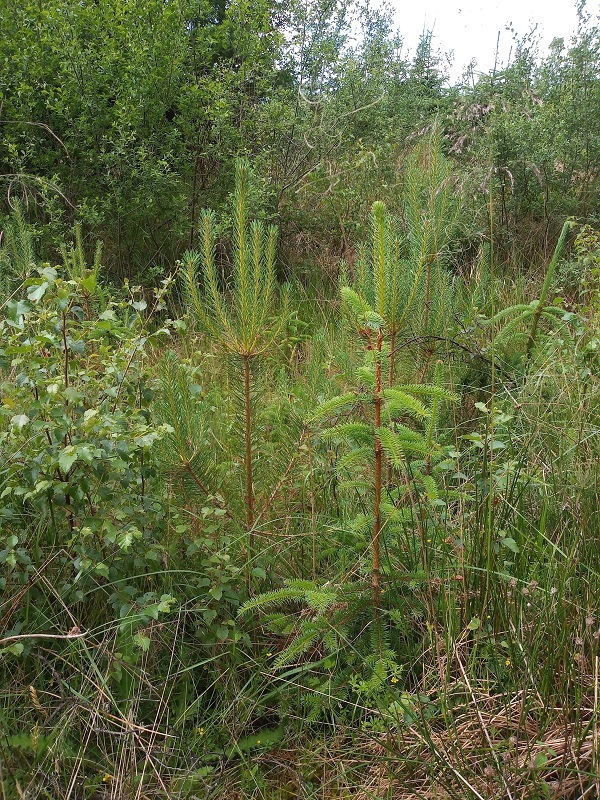
Deer, birds and other animals have their own paths off into the undergrowth, but for humans, the area where trees were felled before the Commission ceased to work are becoming impenetrable, Gorse crowds thickly on either side of the track, requiring constant maintenance to keep it from meeting in the middle. Self-seeded birch, larch, Scots pine and willow are all growing well, but there are no paths between them in this baby wood. Then there are the trackside deep ditches, another legacy of forest drainage operations, not impossible to cross but very off-putting.

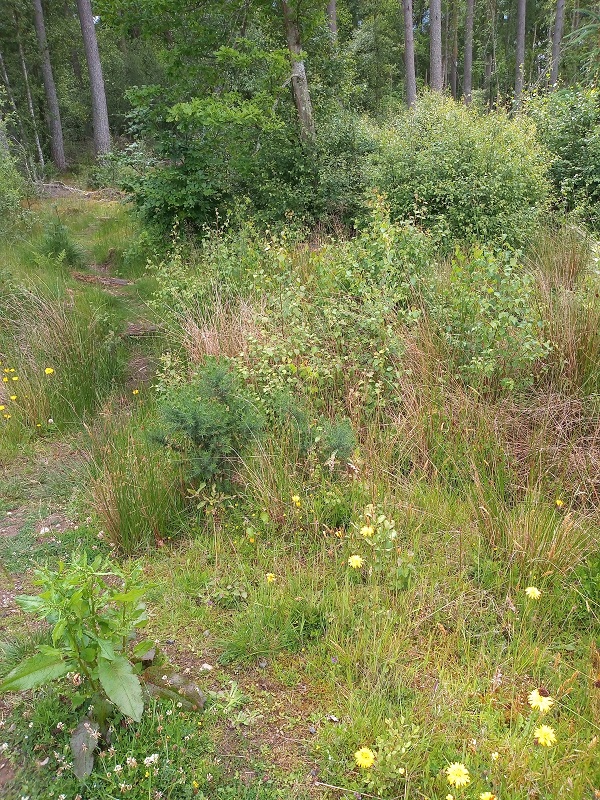
So walkers, joggers and cyclists stick to the circular path and leave the wood by the way they came. Someone on Trip Advisor found the wood disappointing, and the circular track through felled forest boring. But I wonder. We undervalue landscapes that aren’t “finished” – such as newly planted gardens and self-seeded woods at the start of succession. The prettiest part of Five Mile Wood may be the winding bike-track under mature trees which shoots off from the main path near the south entrance, but the burgeoning growth of pioneer vegetation in the centre – the “gap site” as some call it – is vibrant with hidden life, resounding with the flickering flight of small birds and bubbling with amphibians and aquatic life in the ponds and ditches created for drainage. Even the nuisance gorse is a rich nectar source for pollinators and home, each bush, to thousands of spiders and other invertebrates. It’s not what we are schooled to believe beautiful, but in terms of ecology and resilience, it is every bit as valid as ancient oak climax woodland. Not all landscapes can be measured in human terms – though the amount of carbon sequestered by rapidly-growing trees and shrubs will be enormous and far greater than that in a carefully-planned, gardenesque setting. And humans need carbon sinks as much as every other life form.

People like to have choices, though. Choices about where to enter the wood – entrance points close to all the settlements that lie within walking distance. New tracks to follow, new routes to explore, the chance to come out into the sunshine at a different point from where you went in. Paths that cross, diversions, sidetracks, viewpoints. I don’t think they should be the main focus of the wood, or dominate the richness of undisturbed wildlife in the centre. There must be places that are no-go areas for humans, where nature can get on with it, and prove, as ever, that she will make a better job of it than we can.

And then, let our tracks meet and link wood to wood, as we learn to walk more, and be more in nature and less apart from it. Then we will lose our expectations of park furniture and entertainment, and realise the woods aren’t, in the end, all about us.

What we Choose to Eat from the Woods

Horsehair Mushroom swarm

As soon as I entered Taymount Wood, I smelt mushrooms. Across in the pattering shade of the woods to my left, a family was ducking and diving and exclaiming across the ditches to each other. I could glimpse baskets, a small dog, a child or two.

Great! I thought, people foraging. Good luck! With chanterelles from a previous forage in my fridge, I just wanted to walk without expectations or intent.

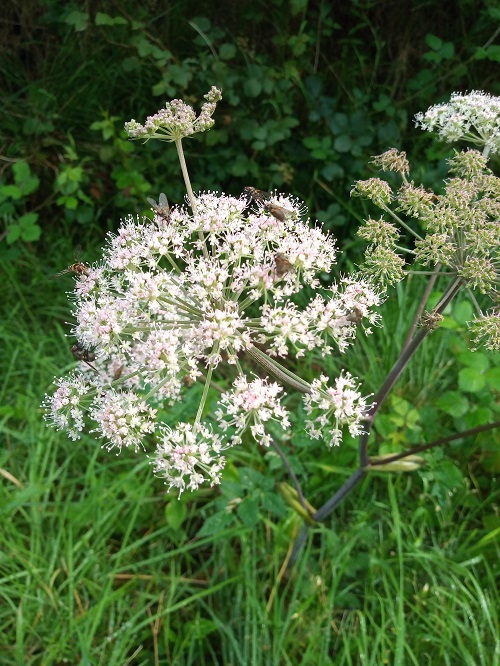
Looking for late summer flowers, I was taken by the large numbers of Wild Angelica growing either side of the path. Each geometrically arranged flowerhead hosted a happy horde of hoverflies and other pollinators. I’m 99.75% certain it is Wild Angelica, an edible plant – but I’ve never foraged it. The quarter of a percent of my brain that says “But wait, it might be Hemlock or one of the other poisonous members of the family out to deceive” prohibits me, despite the smell, season and appearance.

99.75% Wild Angelica

If in doubt, don’t. I no longer take risks with my foraging.

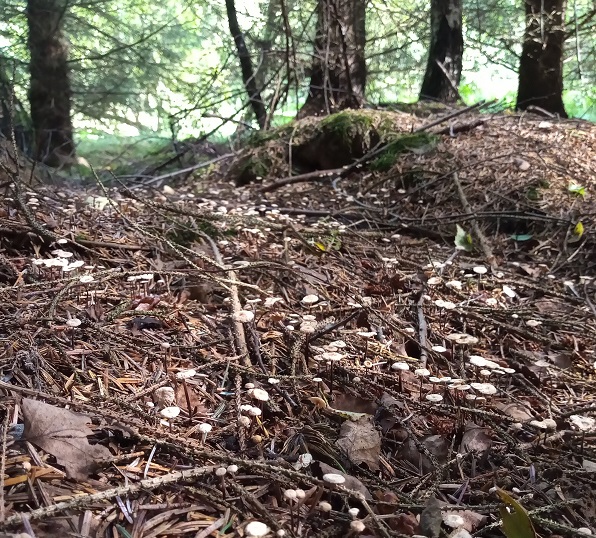
Taymount Wood is the wood that sidetracks me, every time. Up to the right, a sunlit glade. Cross the sleeper bridge to the left – what’s in here? Horse-hair mushrooms (Marasmius androsaceous) swarming up from the pine needles. A collection of puffballs (Lycoperdon perlatum) in mint condition cried out to be selectively foraged. Only firm, young ones are tasty, and leave more behind than you take.

Puffball (Lycoperdon perlatum)

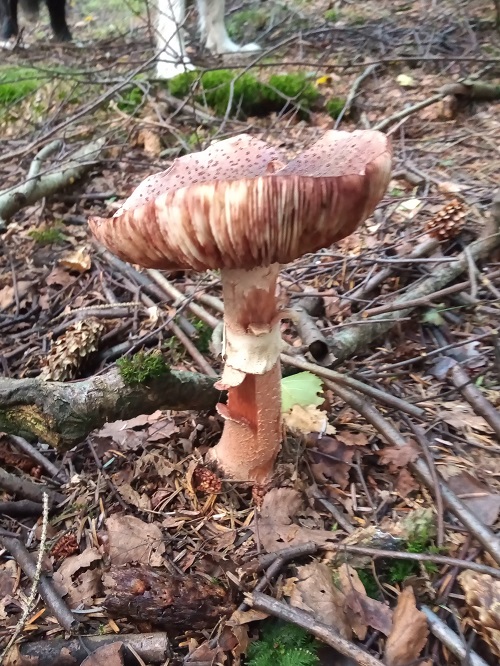
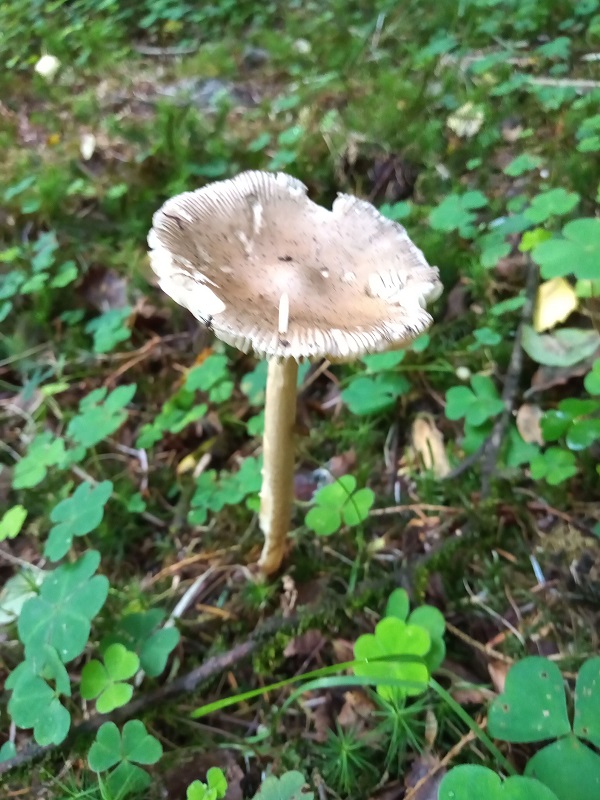
One family of mushrooms of which you have to be wary is Amanita. There are some deadly poisonous members, some only moderately so. Others will send you psychotic. There’s a few edible ones. Taymount Wood today was full of Blushers (Amanita rubescens), one of the edible ones. I have never eaten it, and never will. The flesh bruises pink, which is the indicator of the species – but in other respects it is too like the deadly Panther Cap (A. pantherina). Just suppose a Panther Cap happened to blush one day….. In any case, Blushers are always riddled with worms and maggots before I get near them. Today, both species were growing close to each other and the difference was obvious. I still wouldn’t risk it.

In the photos below, a Blusher on the left, showing the ring; three stages of a Panther Cap; but what do you think is the one on the right? See what I mean?

The Tawny Grisette (A. fulva) I do eat. Unlike most of the family, there is no ring around the stipe, and the edges of the cap are evenly striated as if by a pastry-cook. They were here – but it’s a socially-distanced species that only ever appears singly – and I hate to take the only one.

Tawny Grisette

The stench of death – but not quite death – drew me to the well-named Stinkhorns (Phallus impudica) in the ditch. Most people recoil at eating this mushroom, which exudes a sticky gel smelling like a corpse to attract flies to spread the spores. But I’ve eaten plenty – at a very young stage when they look like eggs protruding from the forest floor. There’s no horrid smell and the jelly surrounding the immature fruiting body is actually delicious. All right, to each her own!

Stinkhorn

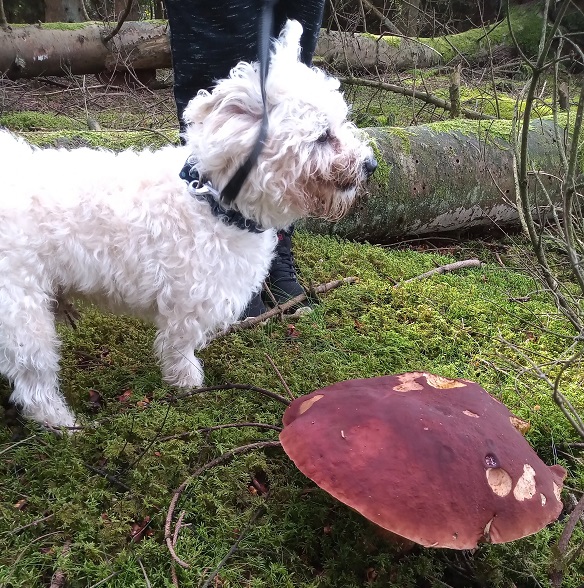
Sidetracked again, I met half the foraging family. Marcin, his young son (and the dog) had just found the biggest Boletus mushroom of the day. We chatted, compared notes, and I admired Marcin’s basket of Ceps, Bay Boletes and others. Marcin learned his mushroom lore from his mother and grandmother in Poland, and their preferences are the Boletus family, chanterelles and Saffron Milk Caps. He loves these woods, and values them for their beauty and food supply.  The giant Bolete he said he will not pick, but leave it to spread spores and be admired.

I showed Marcin my collection of puffballs. He looked aghast. “You eat them??” Apparently not a favourite in Poland!

This post was written for West Stormont Woodland Group https://www.weststormontwoodlandgroup.org.uk/

The Difference a Drop of Rain Makes

A Post for West Stormont Woodland Group

https://www.weststormontwoodlandgroup.org.uk/

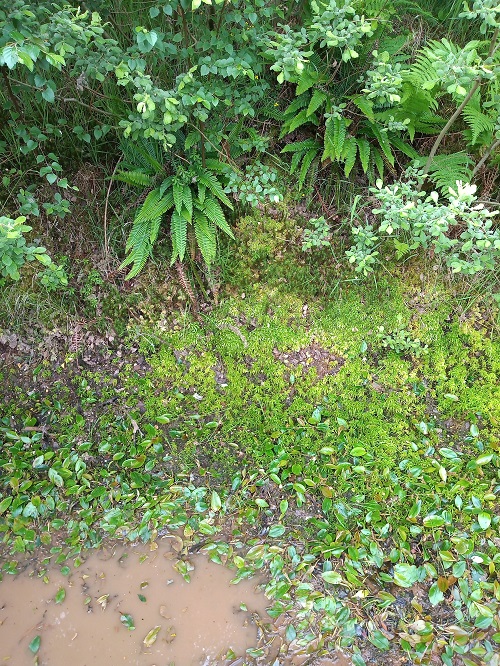
Five Mile Wood today is a wood part-forest, part scrub and heath. When the Forestry Commission took out the last tree crop, they left a fragile fringe, largely of Scots Pine, around the north-east side of the circular path that now forms almost the only access to the bulk of the wood. The Benchil burn trickles through and under the path here, on its way to the Tay, and water from the high water table of the central area percolates into a series of pathside ditches and curious water-holes made by a forestry digger. This is the wet side of the wood. While the trees must take up a lot of water, their canopy also prevents evaporation, and after recent heavy rain, the glades and ditches are alive with summer flowers and butterflies.

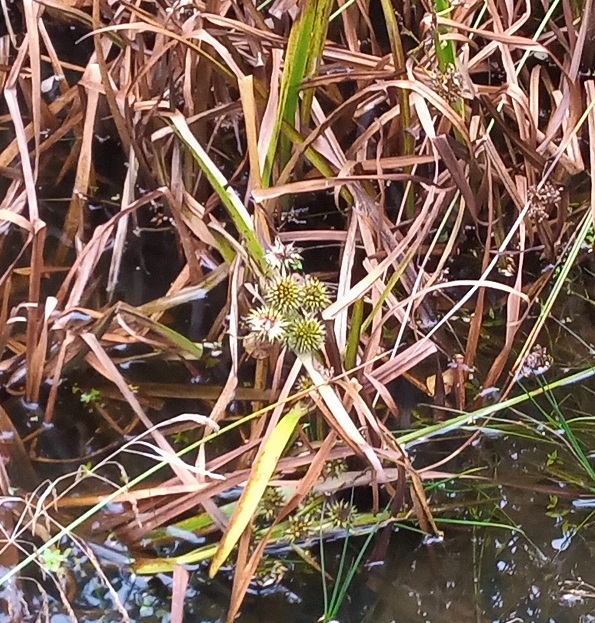
Sphagnum, Lesser Spearwort, ladder ferns and willows congregarte in wet ditches.

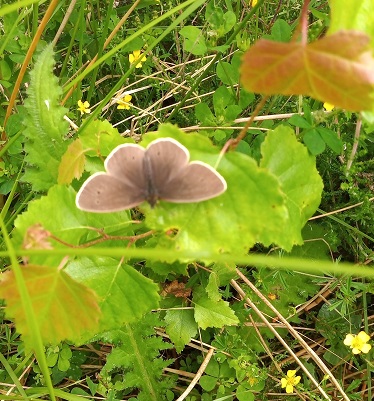
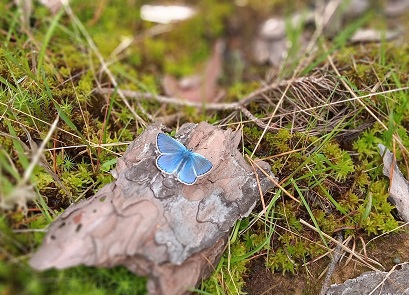
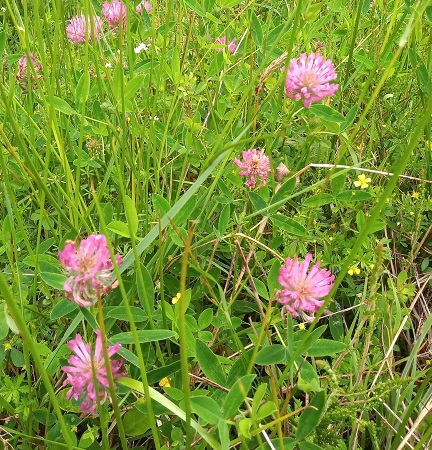
Heath Bedstraw and Tormentil are strewn along the path edges like yellow and white confetti, and red clover flourishes heroically on the banks. Meadow Vetchling and Bird’s Foot Trefoil are visited by brown ringlet, wood white, common blue, and pearl-bordered fritillary butterflies, who pause and spread themselves out infrequently on warm stones and bark shreds on the path.

Ringlet Butterfly

Common Blue Butterfly

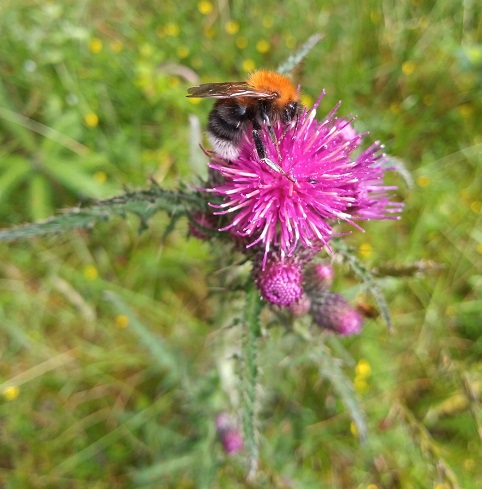
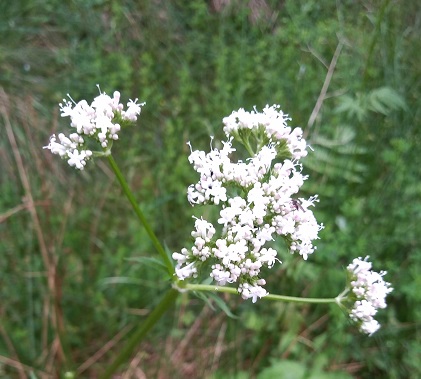
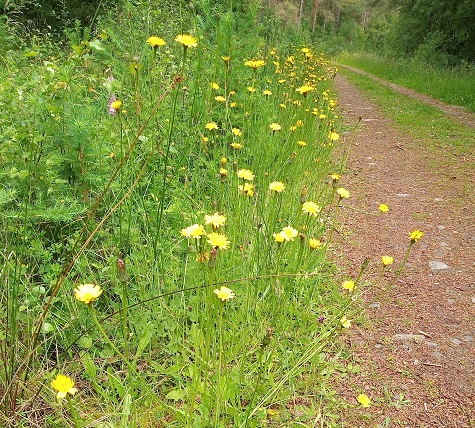
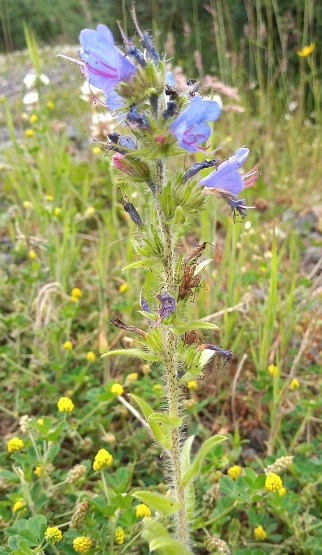
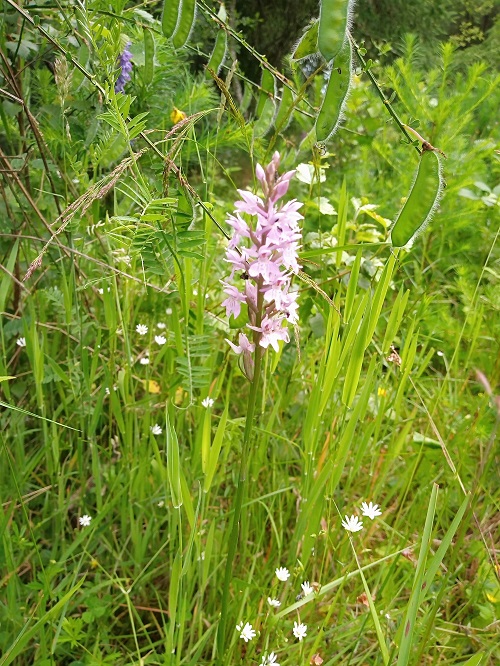
Bright Hawkweeds grow tall and enthusiastic, stretching for the dappled sun that today is scorching whenever the clouds part. In the cooler shade, sweet-scented Valerian grows. It prefers a damp habitat, and its white to pinkish flowers are nectar-rich, a magnet for more butterflies. This plant is widely used in herbal medicine, its roots being a soporific. Common Orchids and Viper’s Bugloss unusually share a habitat. Here and there are thistles, always a good bee-flower, and today a relevant newcomer to central Scotland, the Tree Bumble Bee (Bombus hypnorum) is engrossed with nectar collection.

Tree Bumblebee (Bombus hypnorum)

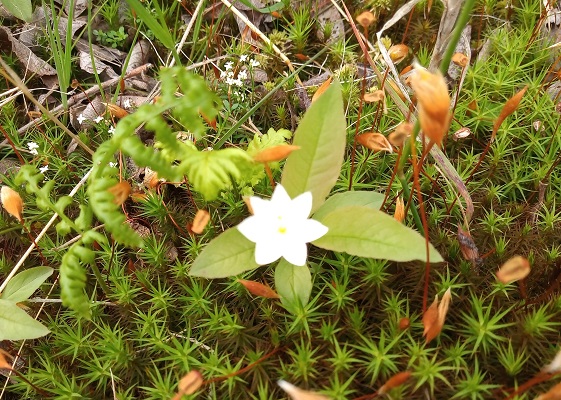
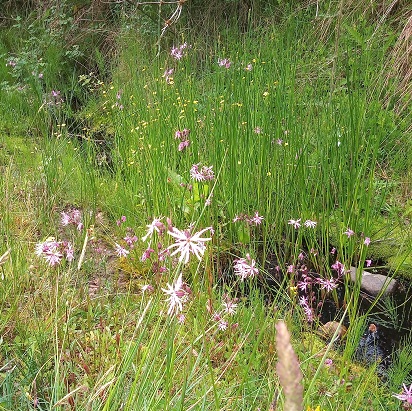
The true nature of this tract of land gives itself away in the damp bases of ditches and where vague deer tracks can be followed a short way into the springy sphagnum. It is part of a network of raised bog, myre or moss that probably once were joined. King’s Myre in Taymount Wood is another remnant. Damselflies hover over the multicoloured water forget-me-nots in conjoined pairs. The Lesser Spearwort dazzles from many a watery ditch and aptly-named Ragged Robin, dances its frilly pink skirts by the burn. Acid-loving and ubiquitous tormentil abounds, and bell heather is in flower already – another treat for insects.

Chickweed Wintergreen peeks out from ferns and sphagnum mosses

We humans are such visual creatures, and it’s the flowers that draw us and grab our attention. But flowers are the tip of the ecological iceberg of the wet side of the wood. Ferns, grasses,  unidentified rushes and reeds are the matrix of this habitat, while unnoticed and unobtrusive, the sphagnum mosses proiliferate, and go on with their work of creating peat, holding onto water – and capturing carbon.

How the woods work to heal us.

Clockwise from top left: Red Clover, Valerian, Viper’s Bugloss, Ragged Robin, Common Spotted Orchid

Bees, Butterflies and an Old Straight Track

5mile wood1

The things you do in a lockdown. I wouldn’t normally walk from the house to Five Mile Wood, I’d call in on my way to somewhere else, parking the car. It’s not an especially long walk, but since they felled most of the trees on the Bankfoot side, cavernous ditches and hollows have made the entrance to the wood treacherous, wet and debateable, and the track to get there goes on a bit and is not especially interesting.

Or so I thought.

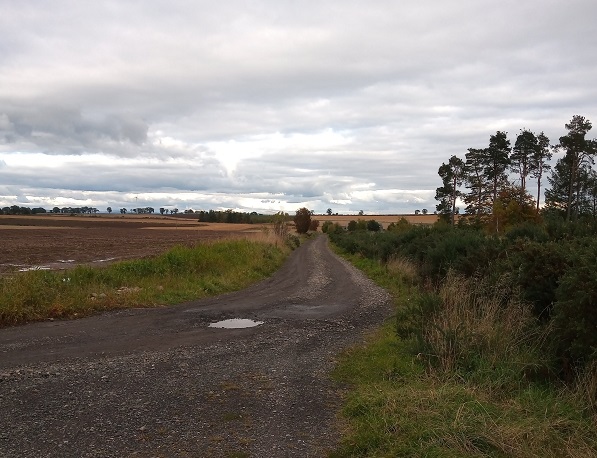
I marched out from Bankfoot on one of those dazzling, sun-struck mornings of which we’ve seen so many this April. We crossed the pleasantly deserted A9 and the field to the edges of Cairnleith Moss and turned right along the track to North Barns. The path stretched ahead in a tediously straight line, the wood in the far distance looking nearer than it actually was. At some point, I turned round to let the dog catch up.

5mile track1

It was a VERY straight track. North, it pointed directly at Birnam Gap, the space between the hills where every Great North Road is forced to pass. Ahead of me, beyond Five Mile Wood, the conical East Lomond Hill in Fife lay in a direct line. Suddenly, it fell into place. With these landscape markers aligned, this was the ancient route north – preceding the drovers’ track above my house, which preceded the winding old A9 through Bankfoot village, which went before the current A9. They all run roughly parallel, and all have to go through Birnam Gap. (Later I consulted the maps: this old straight track seems to have continued beyond the wood to meet the Tay at Waulkmill, then probably followed the straight road through Stormontfield, and on to Perth or beyond).

5mile track2

On either side, vast, treeless fields stretched forever, brown, homogenous, dusty and devoid of hedges. In a hollow beside the track were a dozen beehives. I realised the field I’d just passed did contain a crop – oil seed rape, yet to flower. That’s why the bees were there. A farm vehicle traversed the horizon on the other side, trailing an enormous boom sprayer. Dust and chemicals billowed behind it. The smell in my nostrils was like an airport runway. How on earth, I thought, did the bees keep going, while waiting for the rape to flower? There were no wild flowers in this agricultural desert.

5mile entrance           5mile gorse

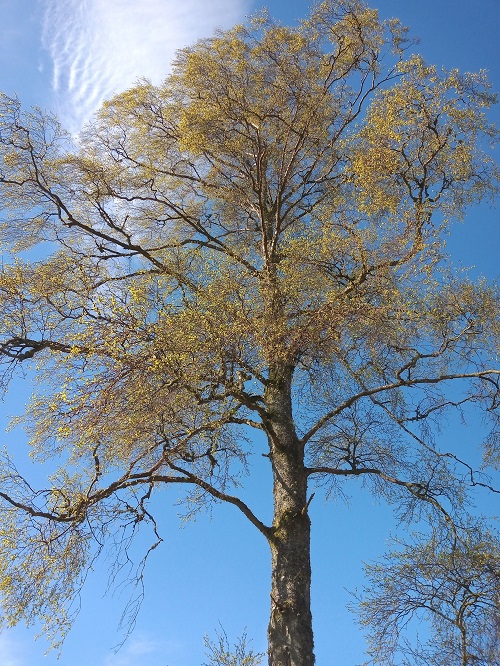
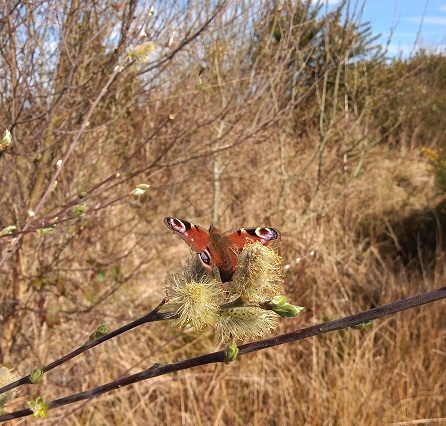
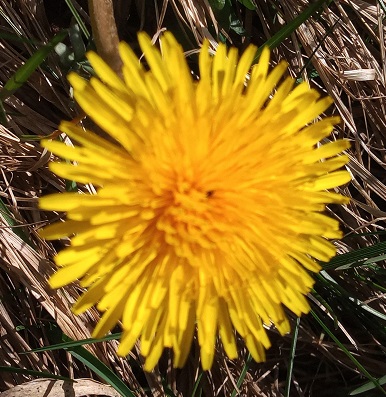
Reaching the edge of Five Mile Wood, I crossed the gate into the ravaged landscape of felled trees. The footpath sign directed me, and I could see where I needed to be, straight ahead on the old track, but a new route had to be picked to get there. Others had succeeded; makeshift log bridges across water-filled ditches, meandering paths that skirted the boggy areas. I reached the main path which circles the interior of the wood amid the heady coconut-scent of gorse – and there I found the bees, working the flowers sprung up in the new heathland created by felling. Beautiful birches, freed from forest, leaves just opening against a vivid sky. A border of dandelions edged the path, dancing golden and perfect in the sun of noon. Goat willows, pioneer trees of clearings, still in flower, had attracted a small swarm of peacock butterflies. In the new landscape of a one-time forest the bees and butterflies and all the creatures of the heath found sanctuary.

5mile birch     5mile peacock

Returning home, I thought about how important this chameleon landscape is, set against modern farming. I thought, too, about the old straight track that entered the woods, and how its purpose was muddied by activities that had made it so hard to follow. I thought how approach and access is so important, in any plans we may have for these woods in the future.

5mile dandelion

Ambushed by Birdsong in Taymount Wood

“Much laid plans” and all that. I knew exactly what I was going to write about in my second post for West Stormont Woodland Group. It involved walking quickly and without distraction to King’s Myre in Taymount Wood.

But on this sunny, yet briskly chilly morning in March, the birds had other plans for me. We hadn’t got far when the dog was infuriated by an ear-piercing whistling made, apparently, by a bush. Eventually a tiny bit of the bush detached itself and was revealed as the smallest bird with the loudest voice – the wren, bustling ahead of us from twig to twig. The dog hates wrens. They scold, scoff, and shout at him, warning everyone he’s about.

TW scotspine

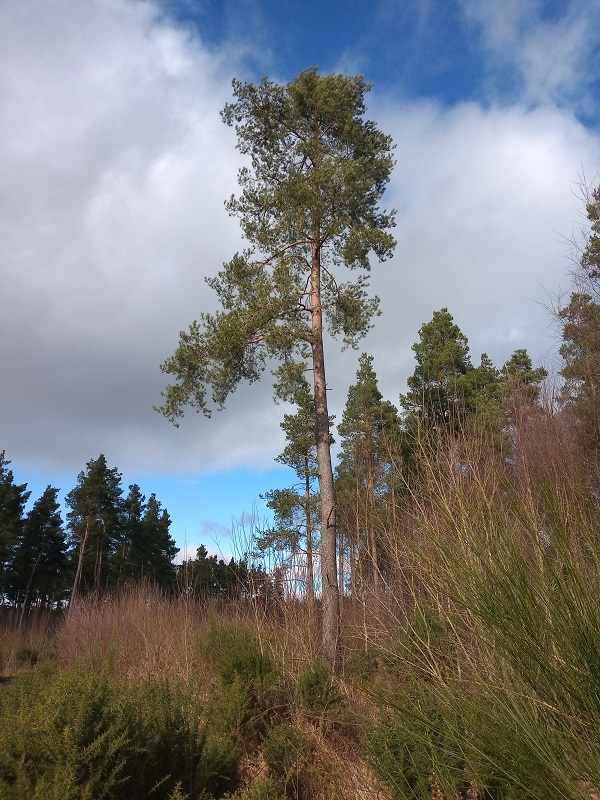
We dawdled on. Taymount contains a fair variety of tree species for a plantation. Tall Scots Pines lifted their crowns to the sun. Here and there, where selective felling had left a pine with elbow room, the narrow confines of its growth could be seen morphing into the mighty spread of the Caledonian pines. Larger clearings now host dense, self-seeded birch, through which a flock of greenfinches scurried. Brown bracken, unusual in this wood, lay beneath, thick enough to bed a herd of beasts.

TW bracken

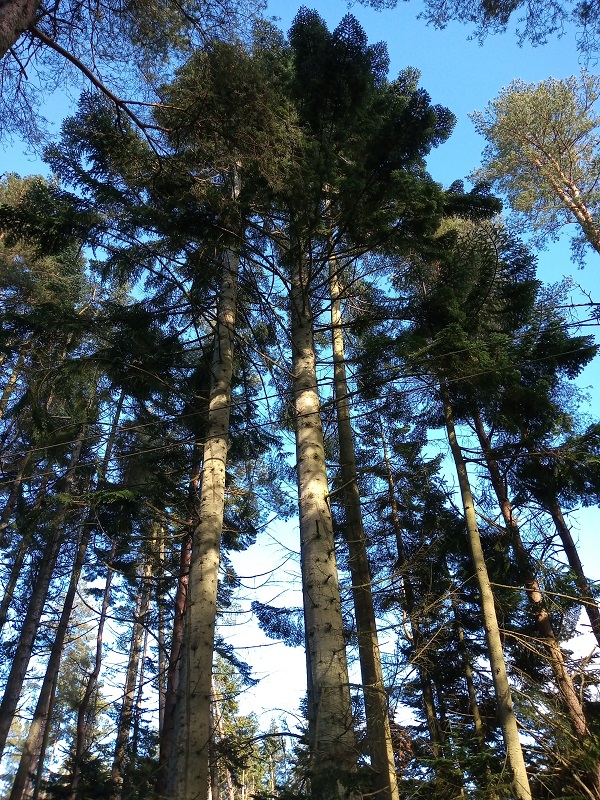
We were on the cusp of spring. Robins proclaimed territories sweetly, compellingly, from field walls. We saw and heard shrill blue-tits, piping long-tails, busy coal-tits, always on the go. Great tits were most strident, high in the trees. “I’m yours! Look at me!” they seemed to cry in their repetitive, compulsive mating calls. Gazing up focused my attention on the trees, too, as silver firs soared into the blue sky. We fantasised about crested tits, one day, coming here.

TW silver fir

We came to some Sitka Spruce which had evaded felling. Sitka is a splendid, statuesque tree when grown as a specimen. If it has no place in the Scottish ecosystem, tell that to the coal-tits. These spruces were laden with dangling ginger cones and coal tits moved systematically from branch to branch, eating the seeds. Then a spotted woodpecker, who’d been ever-present with his drumming, exploded out of hiding and passed right over our heads, a massive spruce cone gripped in his bill.

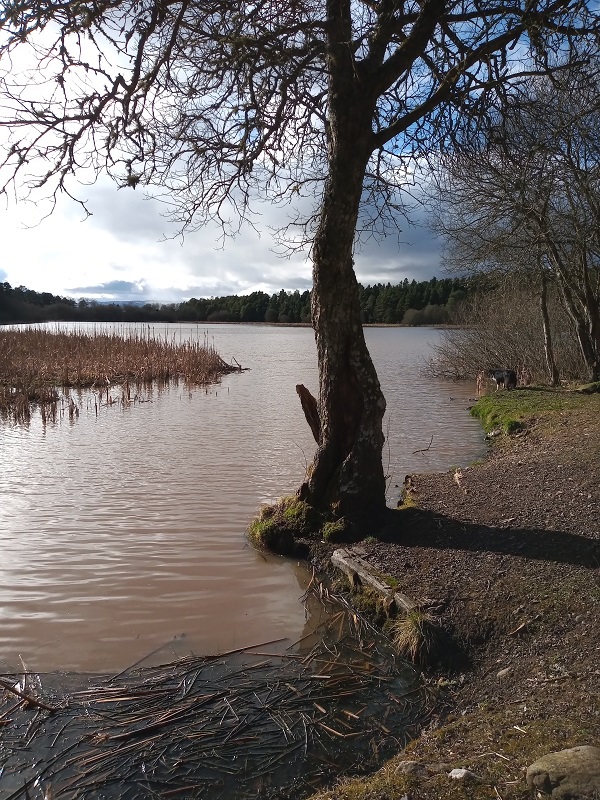
By the time we got to King’s Myre, we just enjoyed the sunshine by the loch. Another day for that tale!

TW kingsmyre1

February: Five Mile Wood


beech saplings

Dreich doesn’t begin to cover it. Weeks of rain, sleet or snow, and the wood is wet, dank, chilly. One storm has passed, another is forecast, and a group of multi-stemmed birches, green with lichen and algae, droop and wait despondently.

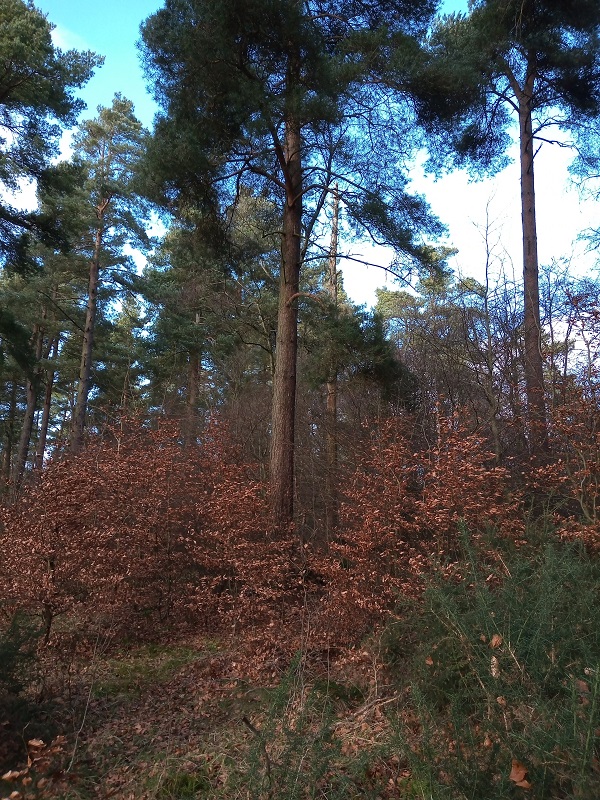
I take the rutted cycling path that skirts the woodland edge. Under the tall, fiendishly straight Scots Pines, many scattered beech saplings nestle in their winter boleros of retained leaves. Beech mast is everywhere, but I do not see the older tree from which it has fallen. Beech seedlings tend not to come up near a parent tree, but somewhere there must be a Mother.

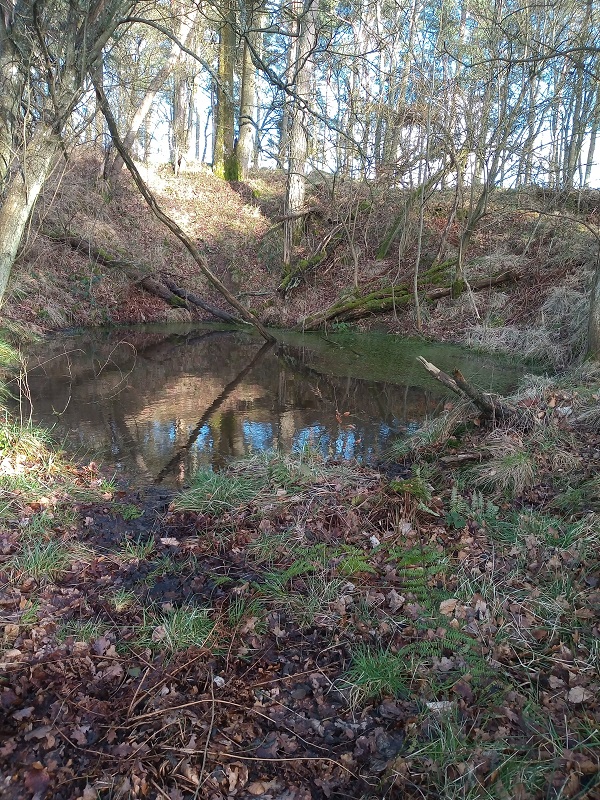
Snow lingers crystalline along the clay-bottomed ditches where black, cold water lurks and trickles. There’s a pond under the pines which so looks like it was formed by an explosion I call it the bomb crater. No signs of frog spawn yet. Several tracks and paths meander where animals come down to drink. Duckweed covers a third of the surface; in the increasing rain thousands of ripples intersect and make diffraction patterns over the other two thirds.

bomb crater

Birds – except for a robin – are silent and glum. A flock of pigeons clatters off towards the field; freshly ploughed, it offers them nothing but the stones that lie heaped in the field corner. How many decades or centuries of cultivation have contributed to this pile? This side of the fence, someone a long time ago arranged stones round a favourite tree, where they remain, moss-covered and half-buried. Larger rocks with wavy patterns etched onto their surface erupt in groups from the forest floor, scarcely distinguishable from the stumps of felled trees. Moss, lichens, algae democratically envelop all.

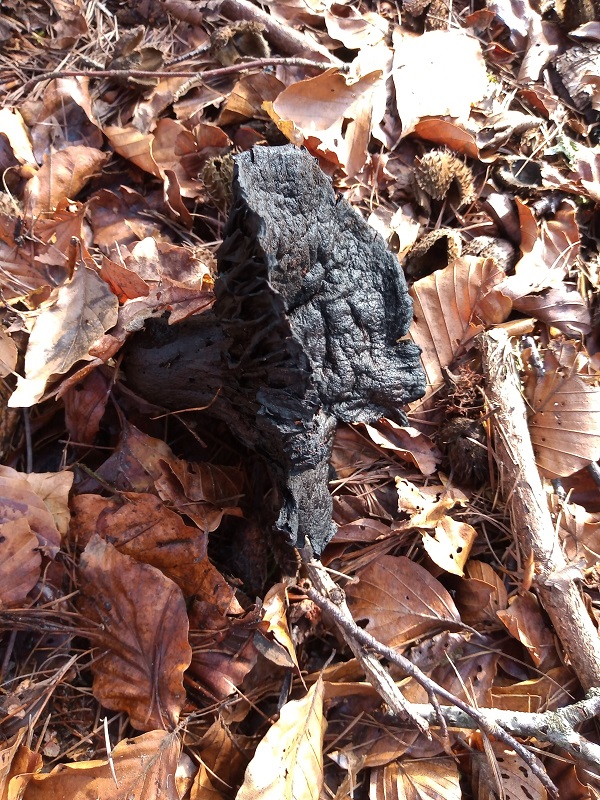
blackening russula

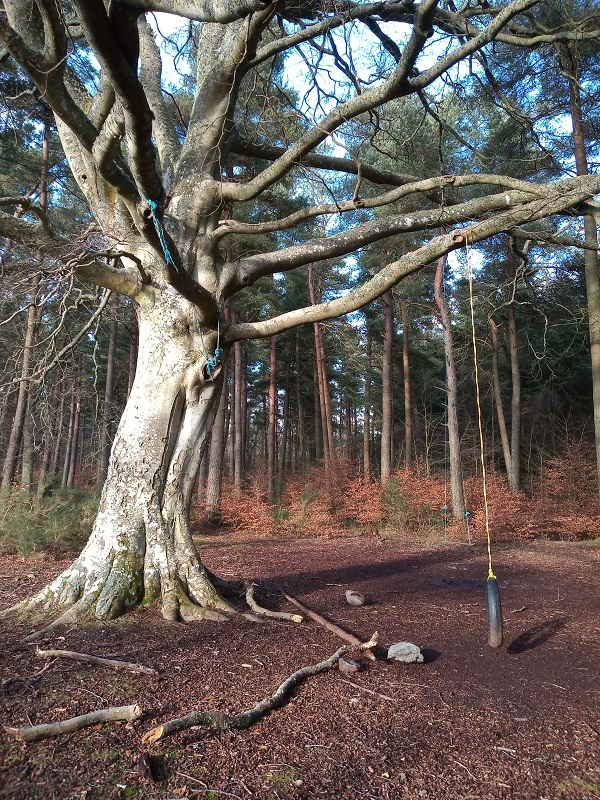
There are charred-looking remains of mushrooms by the path. I think they were Blackening Russulas, an abundance of them. I follow their orbital trail and suddenly find myself under a towering old beech tree, with many spreading branches and a hollowing trunk that makes a chimney of dead wood and fungal rots. Swings hang from two branches; insects and other invertebrates burrow into the soft core of the tree and make their homes. The woodpecker will soon come calling for her dinner, other birds will nest and shout from the canopy. I have found the Mother of Beeches, and of much else besides.

mother of beeches

Five Mile Wood and Taymount Wood are former Forestry Commission plantations just north of Perth. They have for a while been transitioning from industrial timber production to a subtle integration with the wild, and people are part of that wild change. The Commission have put them up for sale, and local people have formed West Stormont Woodlands Group. We are hoping to implement a community buy-out. You can find out more about the plans and group activities at http://www.weststormontwoodlandgroup.org.uk Over the coming year, I intend to write a monthly blog post “Words for Our Woods”about the wildness of the woods, in support of WSWG. This is the first.