Reeds, Rushes and the Spaces between Trees

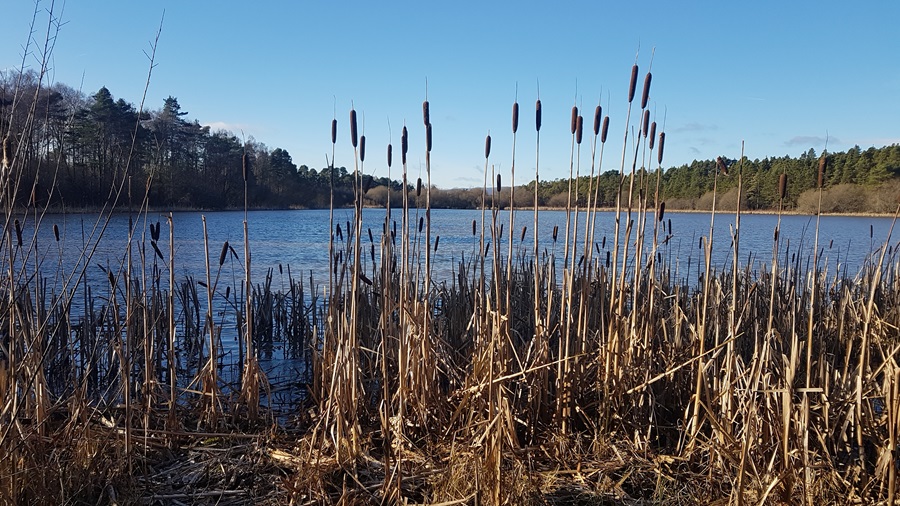
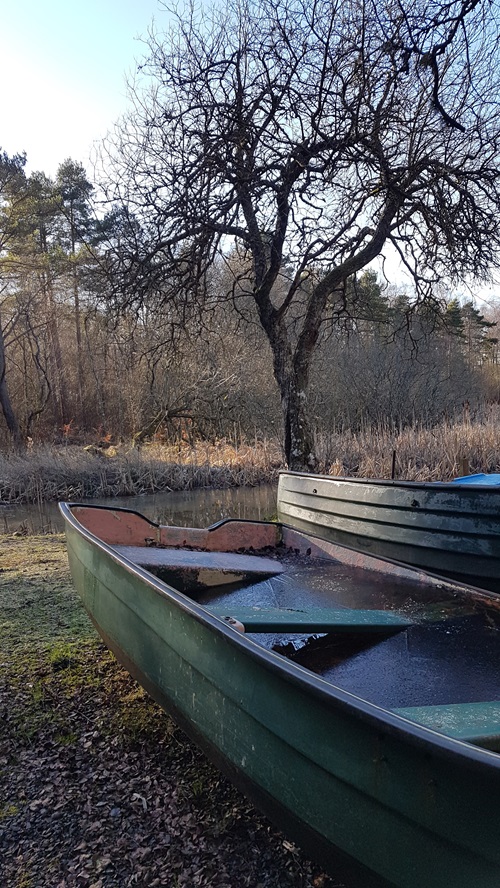
On a quiet day of winter sun and muted activity from woodland birds, I arrive at King’s Myre again. Reed Mace flowerheads from last year cluster around the watery margin, clogging the channel by the little jetty where the boats wait and fill with rain. We used to call them “bulrushes” where I grew up, and it wasn’t till Mr. Illesley, in Rural Studies, enlightened us all about the differences between reeds, rushes, sedges and grasses that I ever learned their proper name– or that Reed Mace is related, but none of these anyway!
It is the same plant known as cattails in America, and valued throughout its distribution for its edibility. The rhizomes – root like underground stems, or underwater ones in the case of this plant – are starchy and filling when baked. They can also be dried and ground into flour, though I never have. The pollen from the male flowers can be used as flour too, or to thicken sauces and soups. It has many medicinal uses. But the best part is the emerging shoot – which will be appearing above water level any time now. Cut, cleaned, steamed, baked, sauteed – it is a lovely spring vegetable to rivals asparagus or bamboo shoots for flavour and versatility. You can keep eating the shoots until the flower spikes start to emerge, you don’t need waders to forage it, and, as Reed Mace is actually quite an invasive plant, it’s pretty sustainable to nibble bits off the clump! Last year’s flowers are starting to burst apart now, revealing the dense, cottony-fluffy seedheads inside.
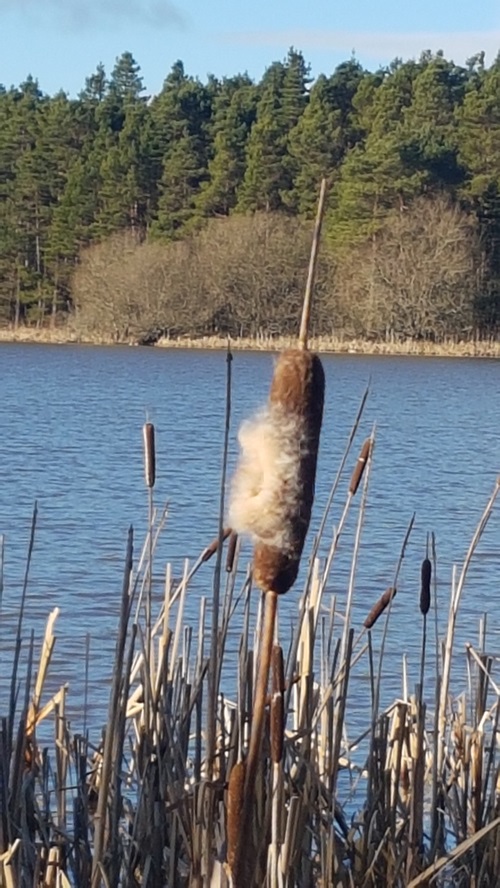
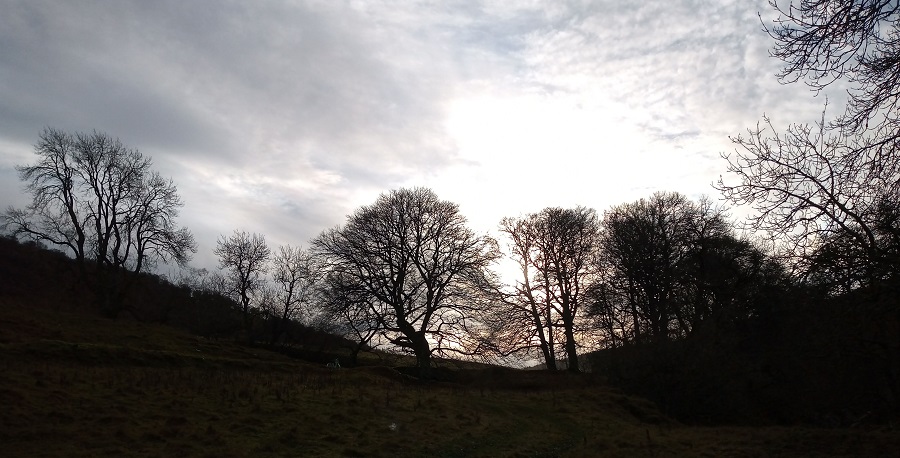
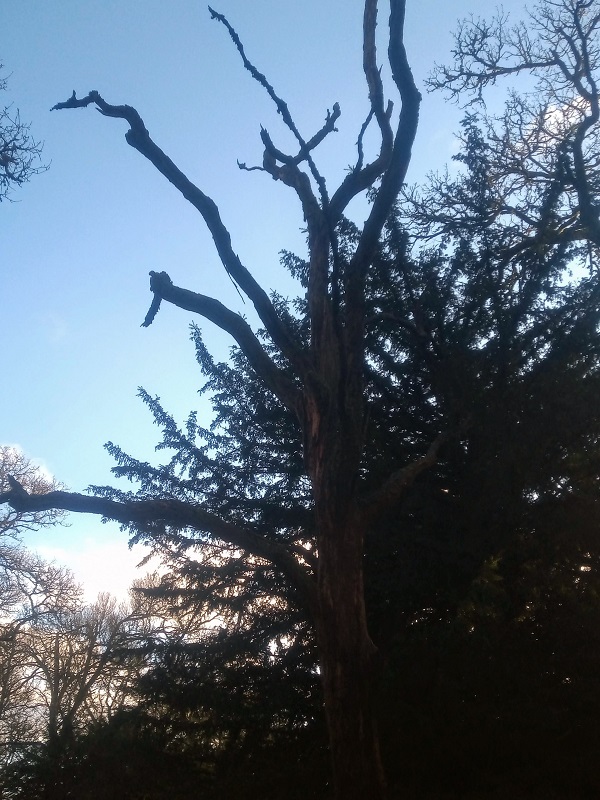
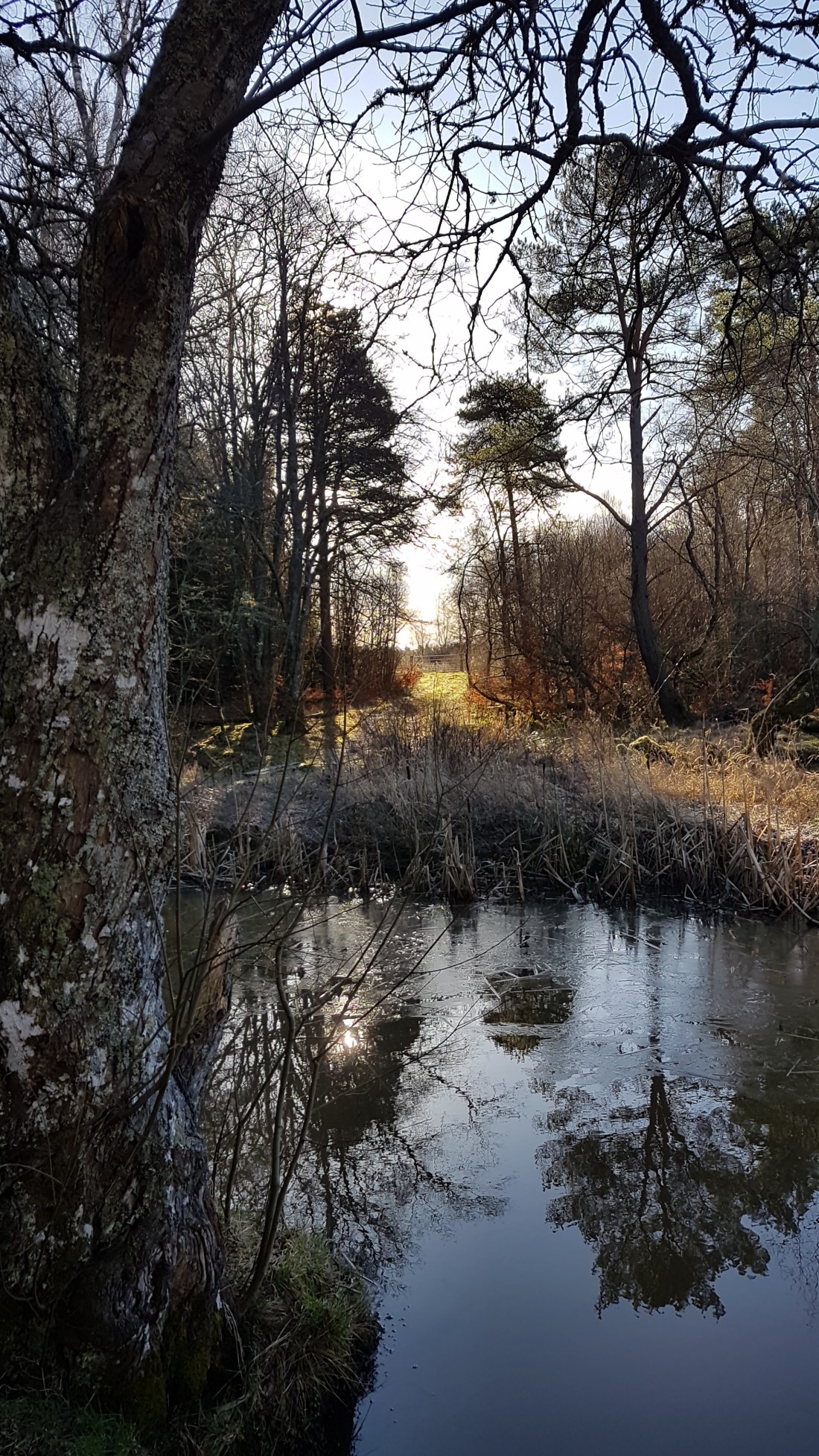
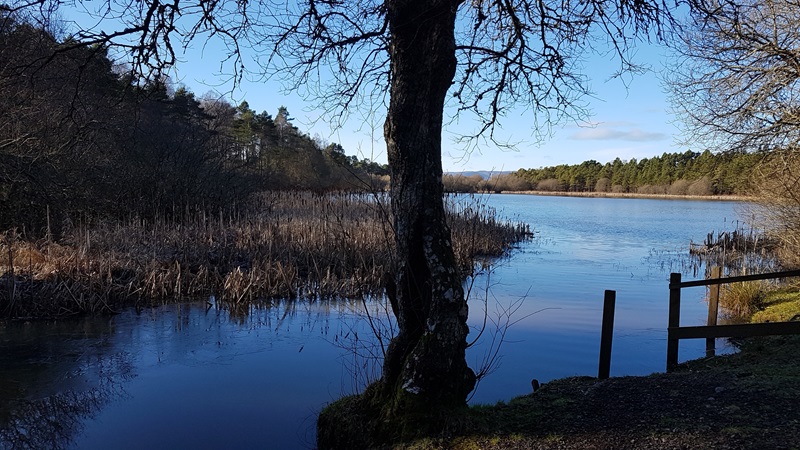
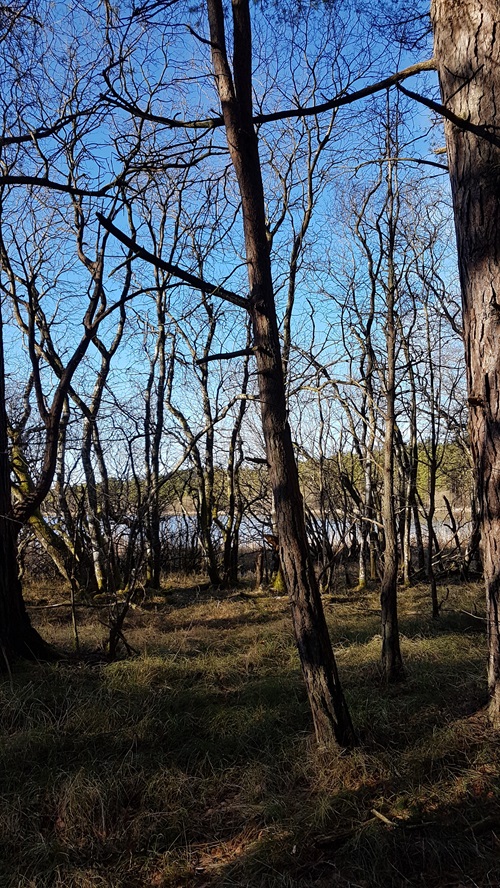
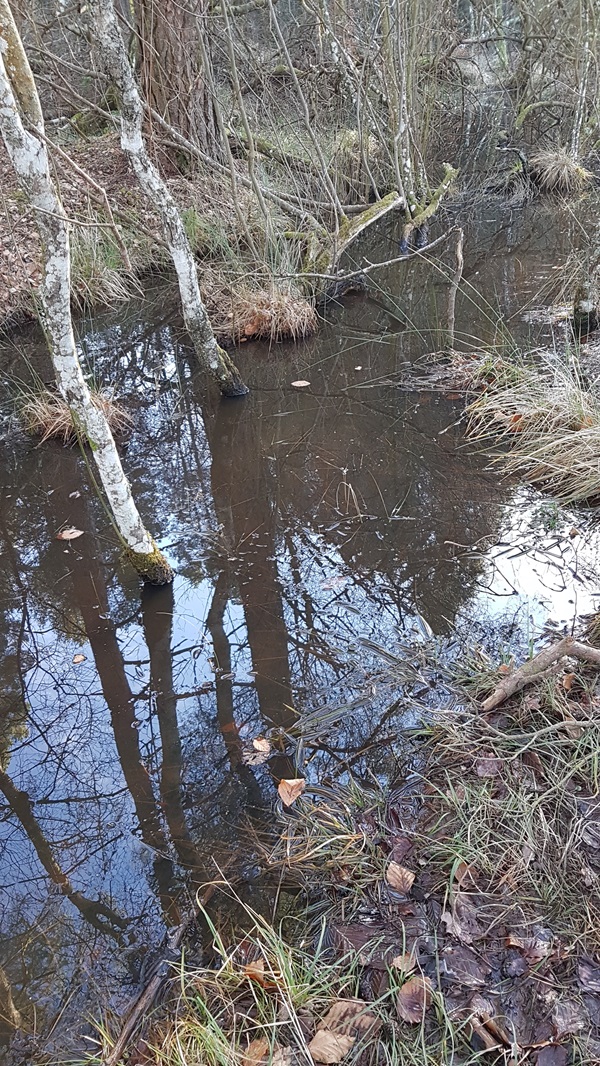
I creep through the spongy, saturated margins of the little loch at the heart of the King’s Myre, to peer through the cattails to see what wintering birds are on it today. Goldeneye, a few gadwall, mallards, a coot, typically swimming against the tide of the rest, intent on his own adventure. No sign of the swans, too early for the osprey to be home yet. In the damp woodland, waterlogged alcoves and scrapes, from which spiky, angular trees grow erratically, wait for frogs and toads to arrive for spawning. Between bare branches, multiple trunks and stems and a storm of tiny twigs, the blue sky seeps as if caught in a vast, arboreal net, reflected in patches of water.
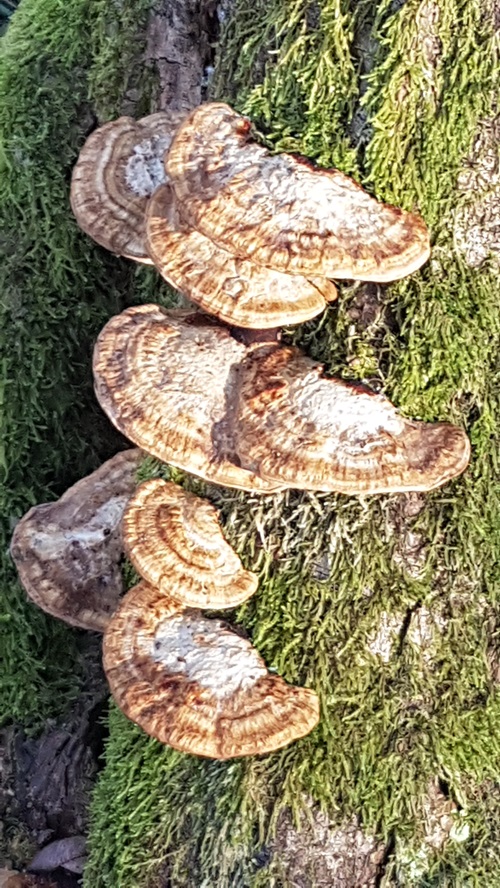
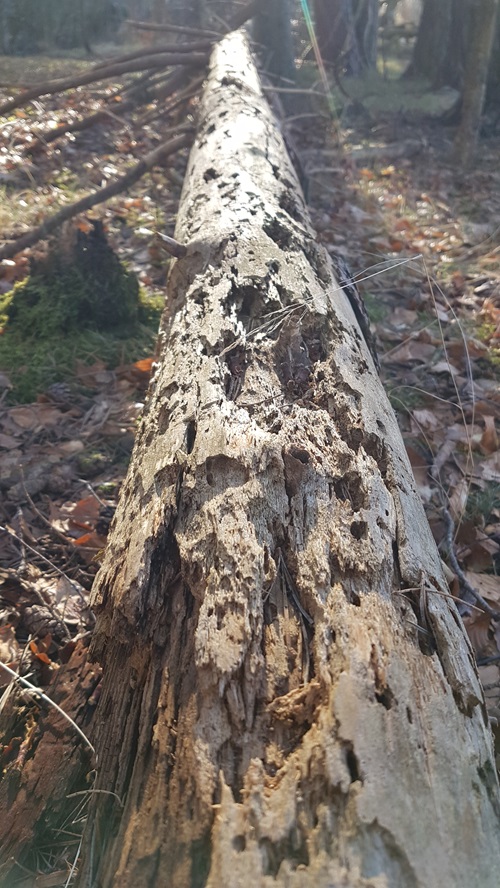
Bracket fungi show off their smug Cornish-pasty smiles of concentric bands, on wood they share with moss and lichen, and a thousand invertebrates. Spread across the leaf-carpeted floor, long-dead logs, un-barked, silvery, yielding, are home to thousands and thousands more, riddled with holes and channels and hidden tunnels in the fungus-softened wood. On cue, somewhere in a dead tree, a woodpecker begins his first tentative drumming and drilling.
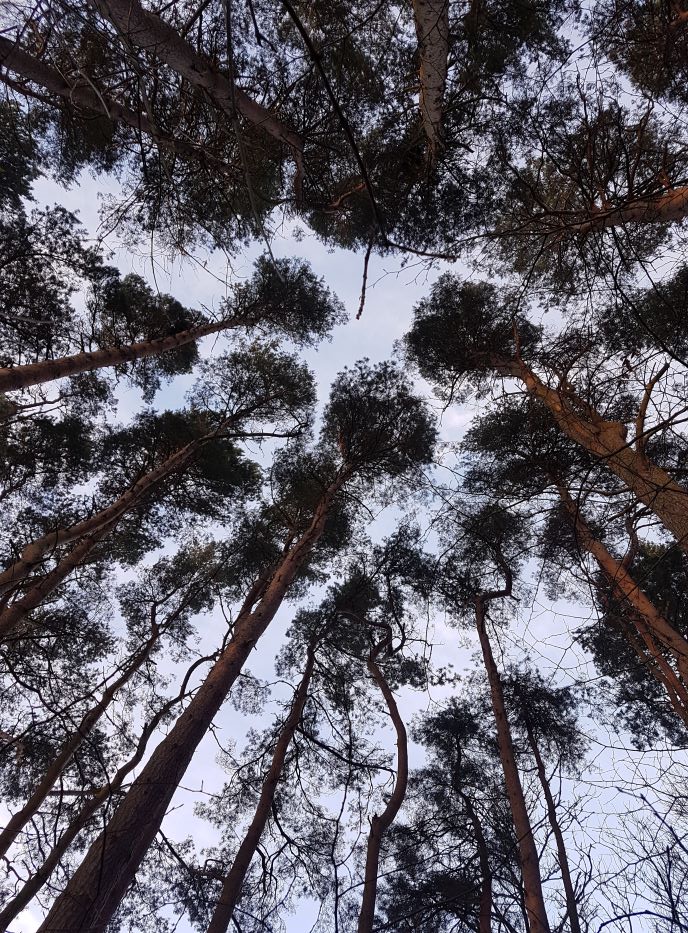
I look up into the Scots Pines, their narrow crowns dancing around each other like polite or nervous teenagers, and see the shapes of jagged sashes of sky, so clear, so blue….
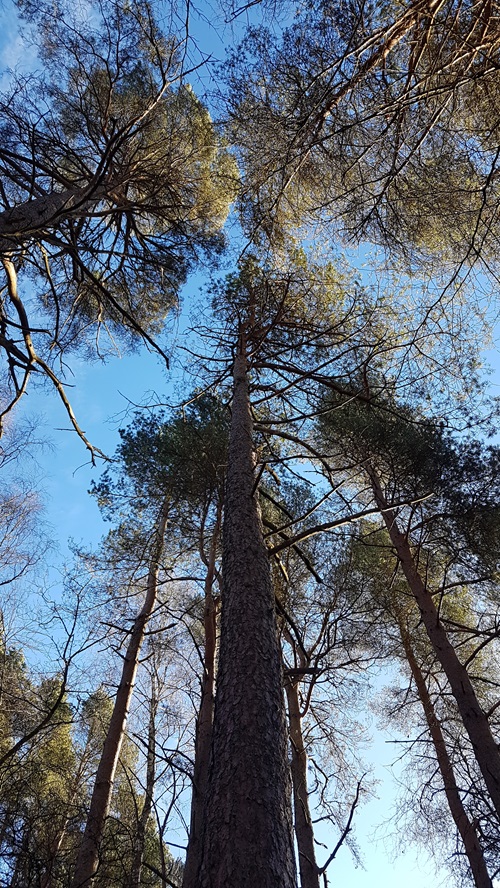
Look up, look through, look between – there is much to see. Or is there only sky?
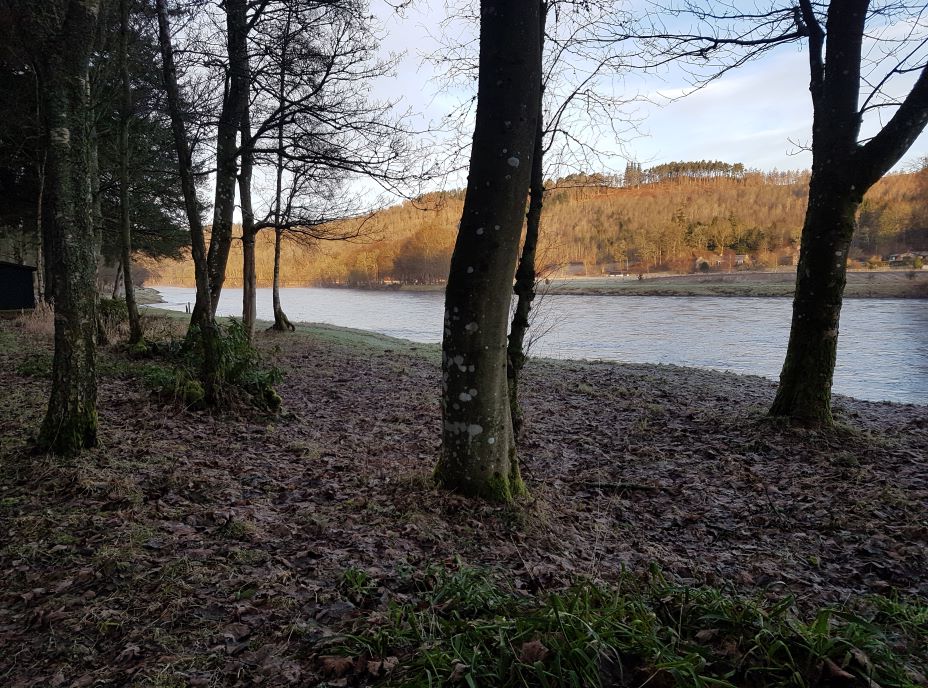
River Tay, January

Early morning, sunny and dry. Silence, save for the mutterings of a river almost out of its banks and racing to reach the sea. Ground solid, unyielding – the type of hardness where you trip up on embedded clods and frazzles of vegetation hiding in the whiteness of a fourth consecutive deep frost – on ground already frozen solid by over a week of snow-half-thaw-freeze again.

Walking along the south shore of the Tay on a winter’s morning kind of ensures you won’t be in the sun very much, no matter how it dazzles the eye. In any case, the river has merrily engulfed the lower fishermen’s path that hugs its margin, so we walk, me and the dog, on the higher ground beneath the limes of the castle drive. Where are all the birds? I wonder. Not even the ubiquitous wood pigeons are out braving the cold. We pass an eroded river gulley and went down the steepish bank to the lower riverside path, joining at the point where it rises above water level and becomes what must once have been an elegant stroll for visitors to the castle. Fishing on the Tay is big business, and not affordable by ordinary people (unless you live in Perth and have the right to fish the stretch within the city boundary). We pass fishing huts on both banks that would make acceptable homes for small families. All locked up, today. No one but me and the dog.

Now I’m closer to the water, I start to notice a large number of white birds swimming rapidly downriver. What are they escaping from? Then I realise the white birds are actually lumps of ice, breaking away from the frozen banks and joining the ice and snowmelt that, with extended periods of rain, has made the river so massive today. A couple of gritty black-and-white ducks obstinately battle upriver, against the flow. What strong legs they must have! They veer off into a little eddying backwater on the opposite bank, and I see other water birds lurking there, taking a break from morning chores.

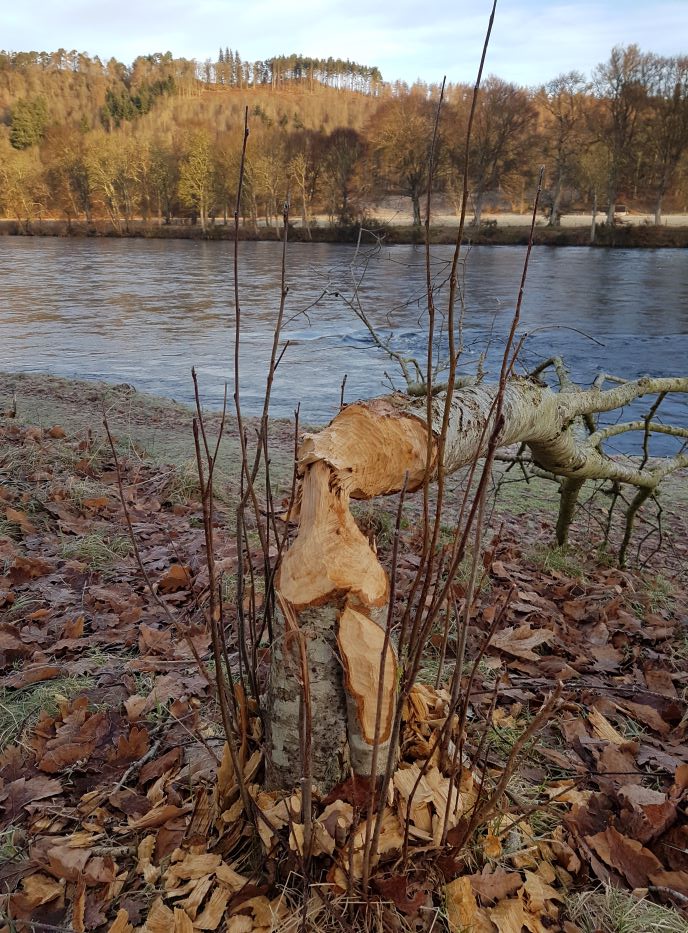
Beaver have been along here recently, but I struggle to fathom their purpose in felling one solitary tree, up the beach from the tumbling water. Maybe just hungry, or doing a bit of coppicing for future regrowth food supplies. I think the water birds could use a few more beavers to create respite backwaters.

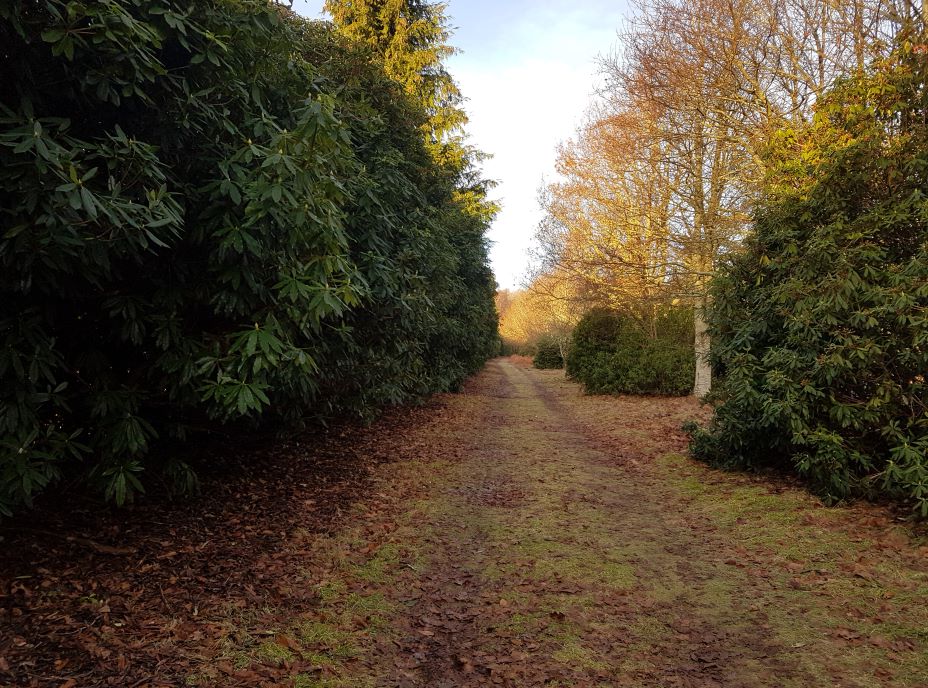
Skirting a long curve round the back of the castle, I pass between forbidding walls of rhododendron bushes. Although they provide some shelter and a small stretch of unfrozen path. they block the view. I spend too much time trying to eliminate them from an ancient oak wood to appreciate their aesthetics. I guess they may provide good roosts for birds, though I still don’t see any.

The core path takes a long, curving route by a bend in the Tay, high above the river and nearly to Birnam before it joins the castle main drive which will take me back to the start if I go left. Closer to the castle, the trees are less scrubby and include many spectacular examples of exotic species, such as Noble Firs, Coast Redwoods and towering Pines. It becomes a landscape of avenues – tottering rows of limb-dropping beeches, stately Sequoias in orderly, sentry-like placings, frowning yew trees in sombre ranks, new avenues planted in recent decades to replace older ones that refuse to lie down and die. Best of all, to me, are the ridiculously shaggy and spreading avenues of old lime trees – each hiding in its own twiggy skirt of epicormic growth. In spring, they provide me with juicy, tender leaves for salad, and intoxicatingly sweet-smelling flowers in summer to dry and make into a sleep-inducing tisane.

As I walk between and under these vibrant specimen trees, I suddenly realise birds have started to chatter, and mixed flocks of finches, secretive tree-creepers and purposeful, hopping blackbirds are awake and accompanying me. Gazing up through the close pine trees, I can just see avian silhouettes flitting busily.

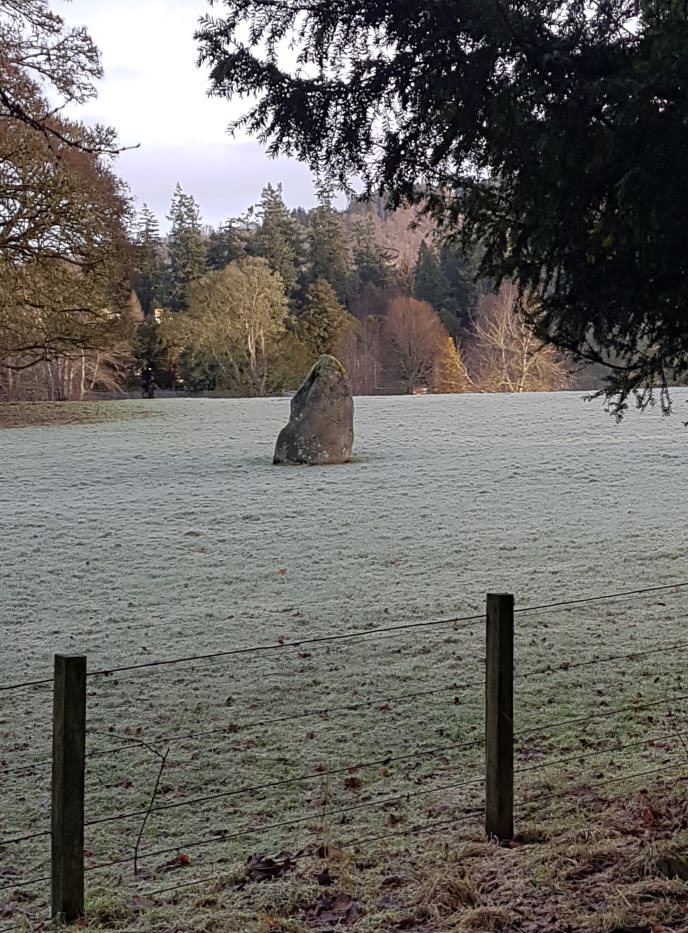
There are paths that could be taken to make a short-cut through the castle garden. Scottish access laws, some would say, give walkers a perfect right to take them, and no doubt some do. I’ve lived in a tied house on an estate where summer visitors frequently asserted this right to take a short cut to a beach through our garden, where we had small children playing and hens free-ranging – and on at least one occasion, hens were killed by loose, uncontrolled dogs. So personally, while I’m proud of our access laws, I think we should respect the privacy of residents and remember those laws also require the walker or cyclist to act responsibly. I’m fine with taking a long way round. The core path eventually passes in front of the castle at a distance (more avenues!), and I note the large, standing stone nearby, like an iceberg itself in an open, frost-enveloped field. It has no name. Does it link with other, less ancient perhaps but curiously-named stones in the area? One day I’ll hunt down the Witches’ Stone (well, this is Macbeth country!) and the Cloven stone….. but not today.

Today, I dawdle back under the limes to the gate, salute the mighty Tay with its miniature ice-packs, and begin to think about breakfast.

Here comes the Sun

The mute swans stand in the middle of Stare Dam loch, looking at their feet in puzzlement, as meltwater sluices over them. They bend round to look beseechingly at me as I stand by the wooden jetty, as if to ask why this strange divinity has been bestowed on them, and why they cannot swim in water as usual. Then with determination they undertake a rather slippery swan take-off from whatever the surface of the loch is, and wheel around the trees in the reassuring sky.

The sun roars through into the morning like a rocket. Speed of light. It burnishes the bare trees and their wavering reflections in the loch, shrieks and shatters the shards of once indomitable ice. Water trickles unseen, seeps from frozen ground, sings in quiet rivulets.

An old song burrows its way into my head, and will not leave. The ice is slowly melting. I stand, eyes closed to the sun, and feel the breeze that no longer lacerates with coldness. I hear the whirring of the bemused swans, the first territorial song-stakes of the woodland birds. It seems like years since it’s been here.

Back at the house, the speculating rooks are at home, sitting in their parliament in the sycamore and debating which of last year’s nests have foundations sufficiently stable to re-use. Twigs start dropping.  I think there are more rook members than last year.

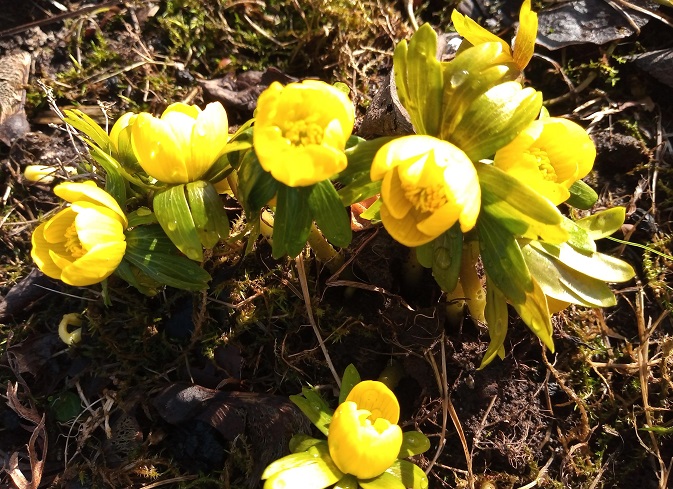
Not all of the calamities and sorrows of the winter will disappear with the snow. But some will diminish, I think, and some will be easier to face. The snow has retreated from bits of lawn. The winter aconites open, and dazzle.

Yggdrasil: The World Ash Tree

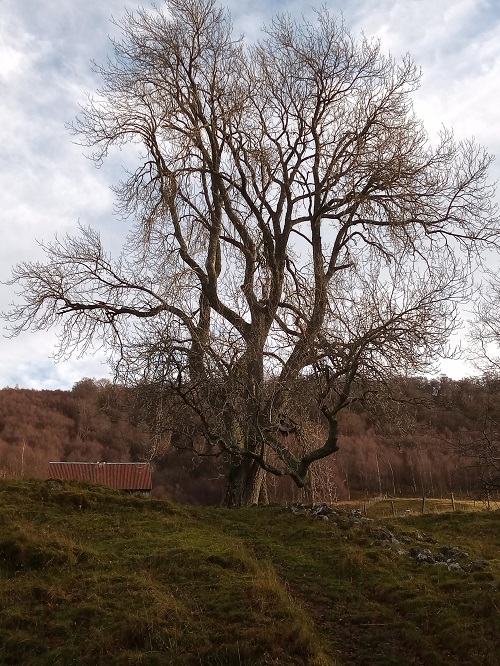
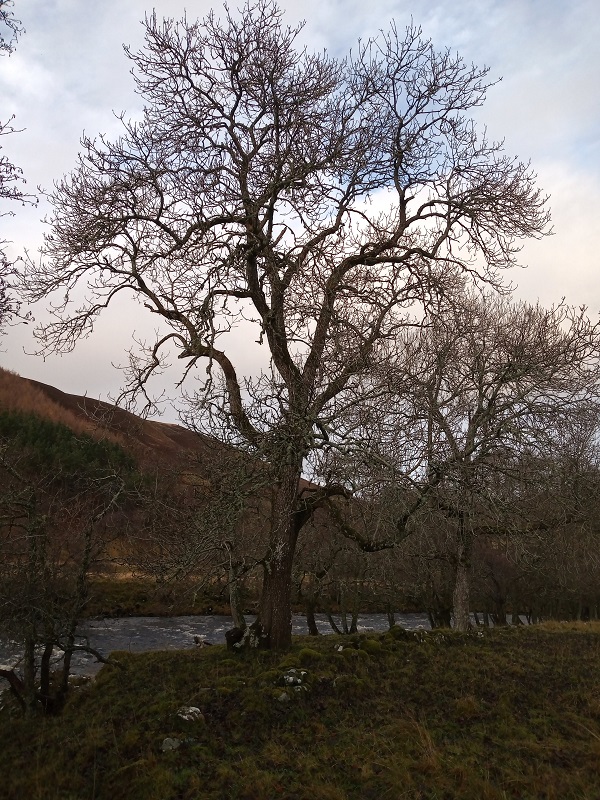
The ash tree, with its distinctive black, pyramid-like winter buds that sit defiantly opposing each other, was the first native tree I learned to recognise in winter. From the grey, ebony-tipped twigs I stood back to take in the whole glorious form of this tree at maturity: the grace and strength of the downward-sweeping branches, the solidity of trunk and main frame, and the artistic flourish with which the ends of each branch skip briefly skywards following their downward plunge.

Like all deciduous trees, the beauty of its structure is revealed annually at leaf-fall. We may love and appreciate our trees in summer, but in winter, we can truly see them. I never tire of looking at trees in winter.

Sadly, the monumental frozen-motion glory of the mature ash is a sight less and less available to us. Ash die-back disease is caused by a fungus (Hymenoscyphus fraxinea) which attacks and infests the bark, leading to wilting of leaves and die-back of those optimistic, sky-seeking terminal twigs. Jaggy, stunted branch-ends and lesioned bark are more often what we see today. The spores are wind-blown, and so it has spread inexorably through Europe. There seems to be little point in felling affected trees, since the fungus spends part of its life cycle proliferating in leaf litter. In pockets where old ash trees are isolated from larger populations, such as Glen Tilt in Highland Perthshire, the majesty of the winter ash can still be seen.

There will be resistant trees, and much is being done to find these, identify their genetic codes, and breed from them. We can only hope the ash tree’s absence from the landscape is temporary.

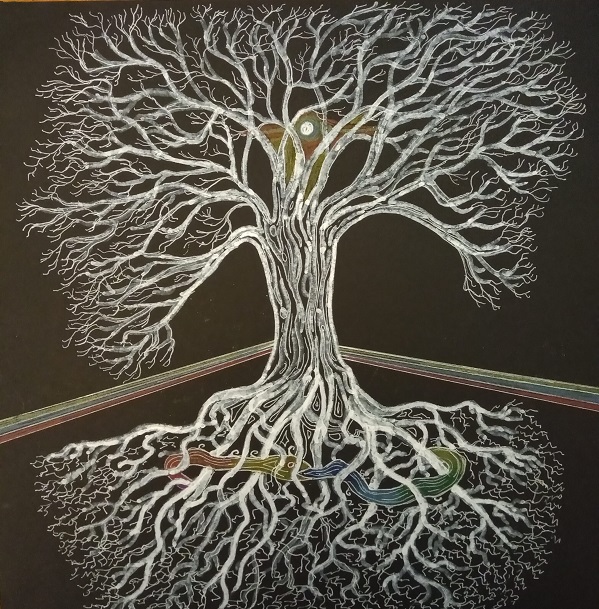
But the Ash Tree has an existence outside the biological. It is – and long has been – a symbol, a magical entity, a talisman. In Norse and Germanic mythologies it is Yggdrasil, the World Ash Tree. Its branches reach into and hold up the heavens; its roots delve deep into the dark caverns of the underworlds, where the serpent-dragon Nidhogg gnaws at its roots. Between the two lies everything we know, and much that we don’t. Three women, the Norns, sit below its mighty branches, tending the World Tree and spinning, spinning, spinning the fates of gods and humans.

The Tree of Life and the Tree of Knowledge are other expressions of Yggdrasil. Odin, father and chief of the Nordic pantheon, presents as a seriously flawed, doubtful and often misguided god. (To be fair, they all do.) Maybe that’s why he disguised himself as the Wanderer, with his wide-brimmed hat (echoed in the character of Gandalf in Lord of the Rings?) and ash staff cut from Yggdrasil, roaming the Earth in search of knowledge and enlightenment. Ultimately, the tale goes, Odin had to hang himself from the Tree, wounded by the ash spear, for nine days and nights, to find the wisdom to save humankind.

Should the Norns cease to care for Yggdrasil, or malevolent forces overtake it, like our blighted ash trees, it will die, and the rooster Gullinkambi will crow from its withering canopy, proclaiming Ragnarok – the Twilight of the Gods.

Will we save our earthly ash trees? Who are the gods whose twilight we would seek in return?

May 2021 bring a sea-change in our relationship with nature, may we all be safe, may Yggdrasil bear new shoots of hope, and may the ash tree survive.

By Riverside to Denmarkfield

Photo by Pixabay on Pexels.com

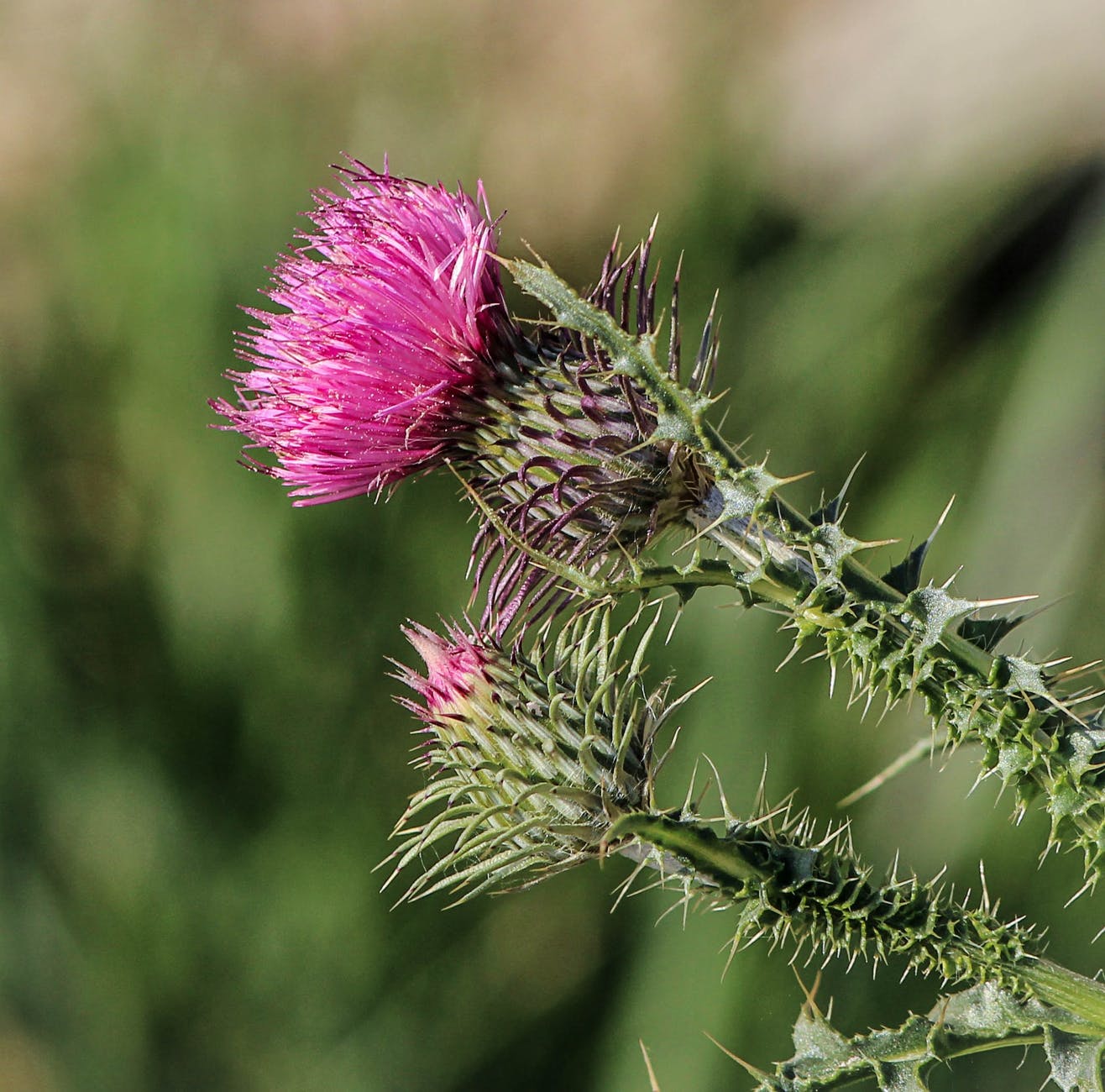
There’s this story in Scottish folklore: A king (Scottish or Pictish) and his army were engaged in a long campaign to repel the Danish invaders who were terrorising the east coast. The Vikings knew that the only way to gain free access to the rich breadbasket lands and the treasures of the religious houses was to defeat the king’s army, which was camped, exhausted, by a river, thinking itself safe for at least a night’s sleep. The Viking spies located the army. and to gain advantage by stealth and secrecy, the warriors began to creep up on foot, swords drawn, and surround them. Thinking their boots made too much noise, the leader ordered his men to go barefoot. Their goal was in sight, until a skull-splitting screech and an unrepeatable Scandinavian oath filled the air. One of the Vikings had trodden on a well-armed Spear Thistle. The kings army were thus warned, and sprang to action to repel the invaders. Since when, the thistle has always been the emblem of Scotland.

*****************************

Last Sunday was the first of the seriously cold days of this winter. It will get colder, but we will have adjusted to it. Nevertheless,it was still warmer outside than in our currently challenged-in-the-heating-department house, so we decided to go for a walk to warm up.

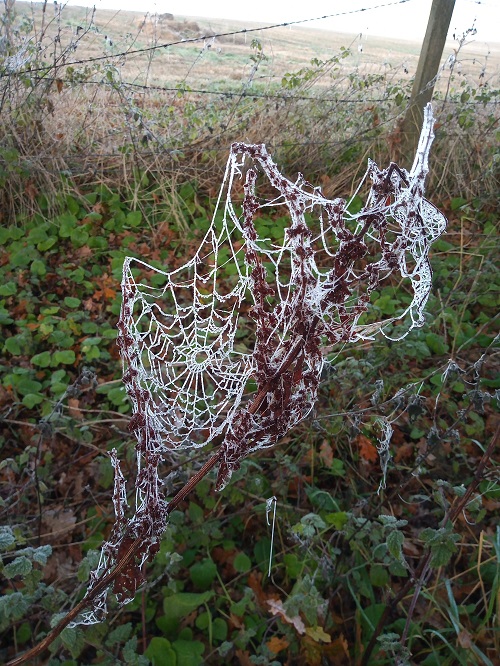
As we sauntered along the footpath from Luncarty to the River Tay, almost a hollow lane, beads of frost and frozen droplets of moisture clung to any material they encountered. Ephemeral, discarded threads pf spider gossamer waved like chilly bunting. Touch one, and it evaporated. Frizzy, curled husks of ice-tipped willow herb seedheads towered as if frozen.

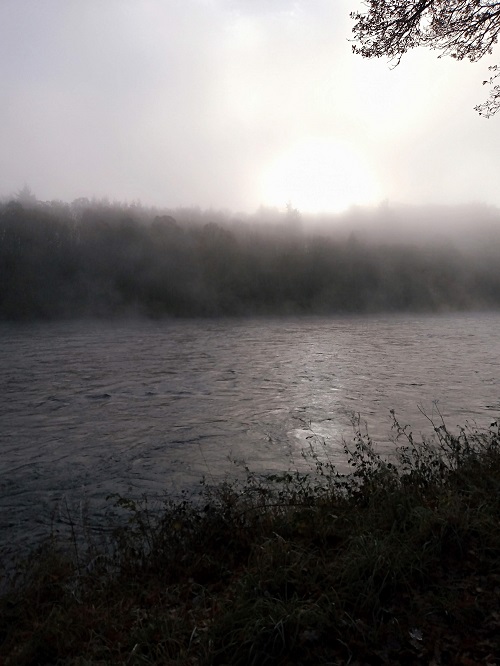
A haar descended. Generally the haar creeps upriver from Perth; today it seemed to come from all directions. Its gloom, exacerbated by the knowledge that somewhere behind it the sun is weakly shining, has the coldest feel imaginable. With wreaths of steam-like fog and mist flowing above the surface, the Tay resembled an Icelandic hot spring.

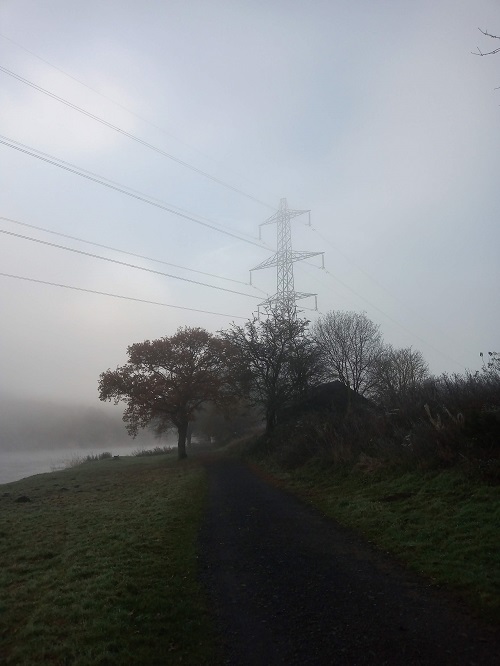
The river path proper starts at the site of the old Waulkmill Chain Ferry – once the only convenient way to cross from one side to the other. It closed as late as 1964, but I think this must have been a crossing point for many centuries before the chain ferry and pontoons were in operation. We headed in the direction of Perth City, watching gigantic pylons loom up from the cold dense air, bringing to mind the Martians from H.G.Wells’ War of the Worlds.

And then we came to the derelict bulk of old buildings beside Denmarkfield Farm, and the unmarked stone that stands in the weedy, thistle-infested ground just above the river. Here, locals say, is the site of that momentous battle that propelled the Scots thistle to prominence, and the stone – called the King’s Stone – marks the spot. That’s why the place, and later the farm, have been called Denmarkfield ever since.

There are plans to build yet another road, the Cross Tay Link Road, from here to Scone on the east bank. The land around the King’s Stone (actually far older than the 10th century) is under a compulsory purchase order. As people speed over the new bridge that will cross the river, congratulating themselves on the ease and convenience, will anyone remember the Waulkmill ferryman, the king who slept by the river, or the Viking with a sore foot?

The King’s Stone

Last Leaves Falling

A Post for West Stormont Woodland Group

I pause on my way through the woods, quieting my breathing, keeping as still as I can. There is no sound, there is no wind. There should be no movement. Yet within the vascular systems of the broadleaved trees that bound the track, small enzyme changes are at work, invisible changes that lead to letting go, abscission, leaf-fall.

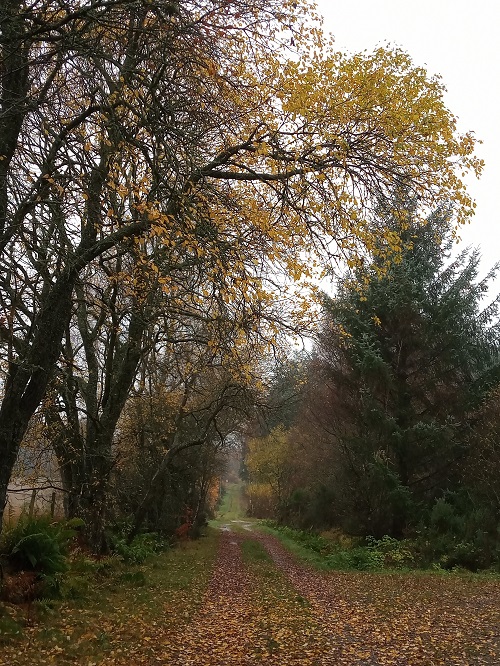
And down they come, silent, slow, like snowflakes in a still winter’s night. There is no flurry, no sound of wind through dry foliage, just the falling. Just the peace. Some trees are bare already. Birches are among the first to blaze golden and lose their leaves. Oaks keep hold of theirs till the last, but then they are usually the last to open in spring. Mature trees abscise before young ones. Young trees, and trees that have been pruned, will produce what’s known as juvenile growth, one feature of which being that the processes of leaf-fall are delayed. That’s why beech trees are so popular for hedges, the dry, crackly leaves slipping from gold to brown and staying in place till spring.

Young beeches, self-sown among the conifers at Taymount Wood’s dark heart, shine like tawny beacons.

They coat the ground, these last leaves, slick with last night’s rain and the condensing sweat of mist that loiters in motionless, tangled branches. Small sweeps of the already fallen lie around sedges and rushes, in hidden puddles and ditches. What else do they conceal?

A small brown toad lurks unmoving as the day, camouflaged among old birch leaves at the path edge. Then he moves, lopes distractedly into the grass, and is visible.

I like the emergence into visibility of the toad, and I enjoy the wood revealing its secrets as the leaves fall. The bizarre jutting side-branch of a fir tree, and the even more inexplicable branch that has fallen over it like a necktie, and somehow grown into an A shape. The filigree, waterfalling twigs of bare birch trees. The holes in trunks and large branches, the red squirrel’s aerial expressway from tree to tree. When leaves fall, I see that some trees are still richly clothed, decked in lichens and mosses so profusely you can’t see the wood, and decorated with the jewels of fruit and fungi. Food, forage and habitat here for small creatures that depend on the woods through the winter.

By the King’s Myre, the stillness of the day is magnified by the strange open vastness of this stretch of water. Reeds and trees and overhanging trees are reflected; birds are absent or silent. In the boats drawn up to the jetty, the leaves lie in rain that’s collected there, the sky bounces back, grey, metallic, motionless. There are no wafting clouds; it is all cloud, all greyness. And more leaves unhook themselves from life, drift down soberly against the small frictions of the early winter air.

On twigs and branches, wherever a leaf falls, a small tight bud, wrapped unnoticed in its winter coat, remains and waits.

Transient

For days now, maybe weeks,
Snow has been coming and going.
Not letting go, not quite in control,
Like the viruses keeping us all on edge.
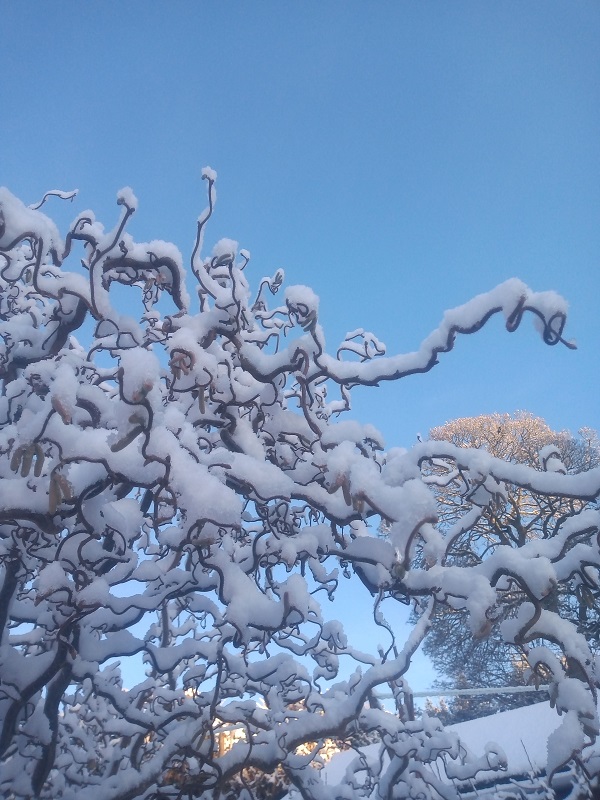
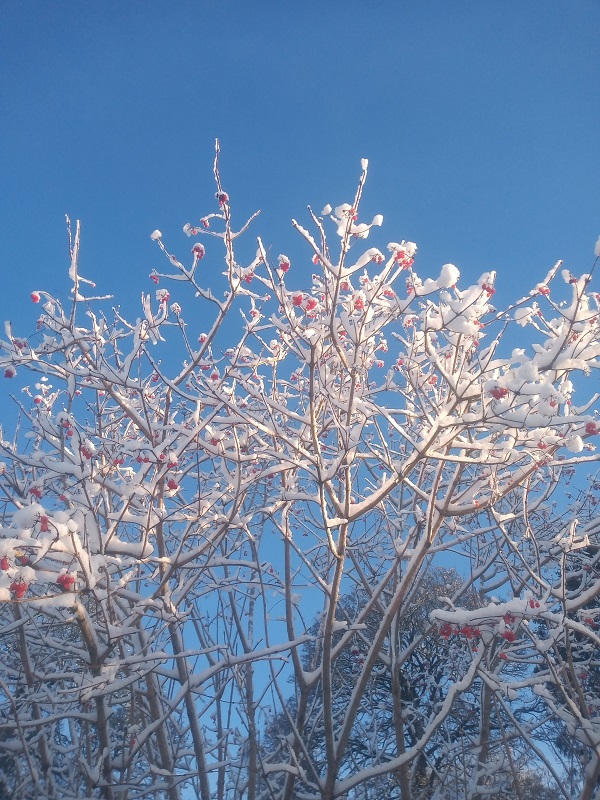
It lies poised on grasses and winter berries,
Between water and ice, catching rainbows,
Sliding off roofs, dissolving under footfall.

snow3

If this were January, we say,
We’d know what we were in for.
The snow would lie, intransigent,
Till we’re sick of it and grow bitter-eyed,
Nonchalant in our cars on frozen roads.

snowhazel

We don’t know what to expect, now,
Of weather. Of self-styled leaders, we expect the worst.
They rarely disappoint.
We, in stone houses with no ambient warmth,
Switch off the odd light,
Turn down the sinful boiler,
Shiver in extra jumpers, even though
We know we’re alone, while off they fly
In chartered jets: to gorge and gabble and guzzle,
And trade in carbon neutral bullshit.

snow guelderrose

Snow melts,
But rides in again on wild winds
To lie, and freeze, and then trickle away
In the unforgiving sun. And we
Must rise, and gather storms around us
Like blankets. Walk out, speak out
And keep on, and on, regardless.

The Bluebell Wood in Winter

bluebell8

We’ve always felt a sense of ownership of our local bluebell wood. It’s the place we take visitors, a secret to share with loved friends and relations. Over the years, it’s become quite renowned, at least in May, when the ancient oak woodland is carpeted with bluebells. People have always flocked to it then, to capture images on camera, to bring children and grandchildren, or just to stare in amazement, breathing in the scent of bluebells that stretch far and wide.

bluebell4

Maybe not so picturesque, but it’s equally magical in other seasons: when the bracken grows up fresh and green, or in its autumn gold, and in winter, when the silence is tangible, the bracken is tawny-brown and the shoots of bluebells lie just below the soil.

bluebell1
The sun is low and carries no warmth; it pierces the sweet sculpture of bare branches and paints the carpet of mosses under the fir trees with iridescent green and gold. It lights up the crumpled and disordered fern fronds as if with fire.

bluebell5

Every oak tree is adamantine and statuesque, posing in naked dignity. The scattered ancient, crumbling beeches also look invulnerable – but that’s an illusion. Every so often, one of them keels over or dumps half a split trunk. Dark, ponderous yew trees here and there are enigmatic about life and death.

bluebell6

At the top of the rise, my favourite tree is a multi-stemmed silver birch, which stands against the sky as if it were painted there. For me, this is Stephen Hawking’s tree. I was on my way up that hill in March 2018 when I heard that he’d died. I sat by the tree and digested the news, sad, but making a mental salute to a brilliant mind. I don’t have many heroes, but Professor Hawking was probably one.

bluebell7

A few years ago, the landowners put the bluebell wood up for sale. That’s when all the folk who’d felt ownership and connection came out of the woodwork. Suppose it was bought by someone who respected neither its status as ancient woodland, nor the long-established right of access? In the end, although a community buy-out would have seemed fitting,  it was bought by the Woodland Trust, thanks to a fortuitous legacy. Sighs of relief were followed by the formation of an enthusiastic volunteer group.

bluebell3

There have been changes, of course. Re-routing of paths to avoid visitors being knocked out by a falling beech branch, a hard line on invasive non-native species that threatened to engulf the bluebells themselves, the eviction of the deer from inside the deer fences to permit oak tree regeneration are just some examples. A car park – inevitable, perhaps, but no ornament… but at least it’s been surrounded by fruit trees.

And a massive planting project of new trees in the adjacent fields that formed part of the sale – thousand of trees, safely behind new deer fencing but accessible via solid gates. Work in spades for the volunteers, for years to come.

bluebell2

It’s rhododendron-bashing day tomorrow.

A Conversation with Winter

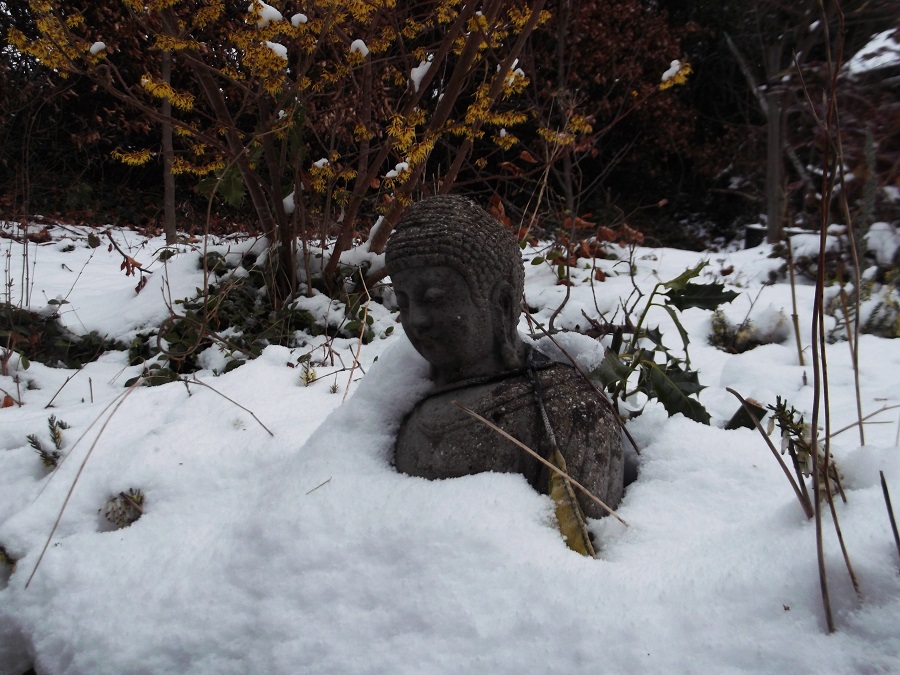
snowbuddha1

What happens now? I asked of Winter.
There is no heat in the sun’s rays. Trees are naked.
Fierce winds carry shards of ice. The voices I strain to hear
Are silent forever now. What’s the script?
What am I meant to do?

Winter, with a scarce-felt fracturing of frost,
Smiles a chill smile, whispers in the wind:
There is nothing you are meant to do. Who knows
How things will be? Be still. Wait.

But I am cold to the bone.
Silence echoes around me.
I chase cold sunbeams,
Look for gold in rainbows and find none.
How will I out-run the freezing of my heart?

I do not know, says Winter,
But I’ll be with you when
You go down to those cold corners
Where under snow and frozen soil
Quiet fermenting and slow gestation
Tick by unperceived;
Where in water beneath the ice, life softens,
Grows drowsy,
Where transformation is incremental
(Too slow to see, too distant to hear)
And seeds swell, shape-shift and shrug off
Chains of dormancy, shattered by cold,
And all is movement in stillness.

See the fire igniting in the ice?
This is not the time of dying.
It is un-reckoned with beginnings.
What happens now? I cannot tell you.
But I will warm you while we wait.

winter1